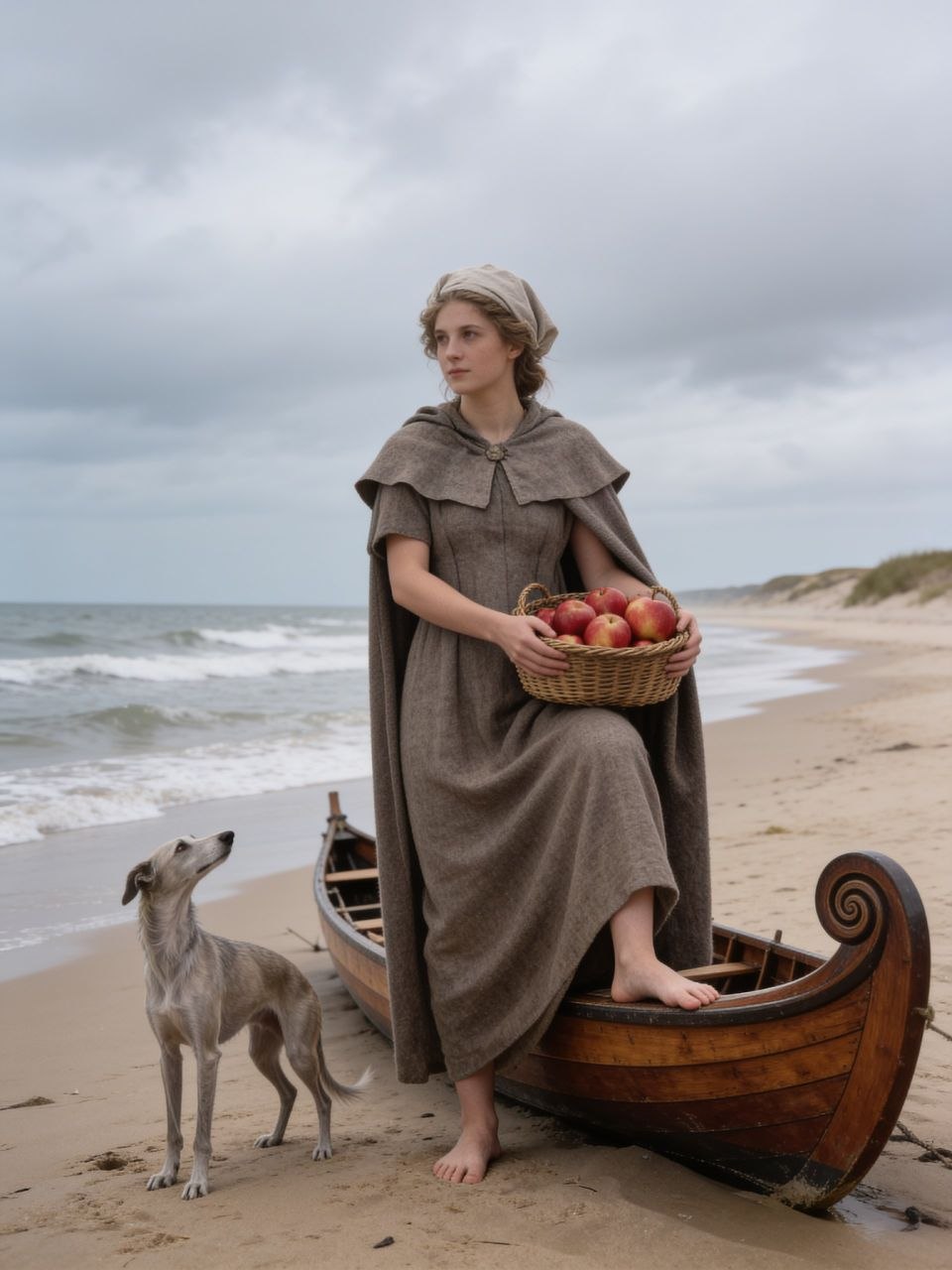
For this first blog post, I’d like to start close to home. A few years ago, I suddenly discovered that I happened to be living near a temple of a fairly unknown goddess from Roman times. A goddess nobody seemed to have heard of until the discovery of her altar stones and temple.
The discovery
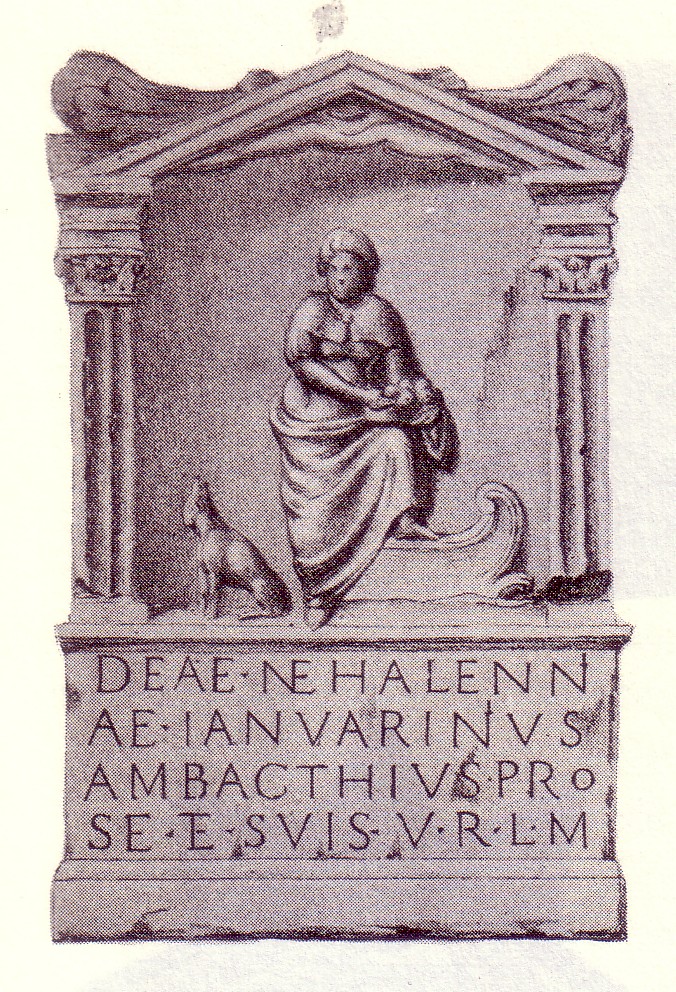
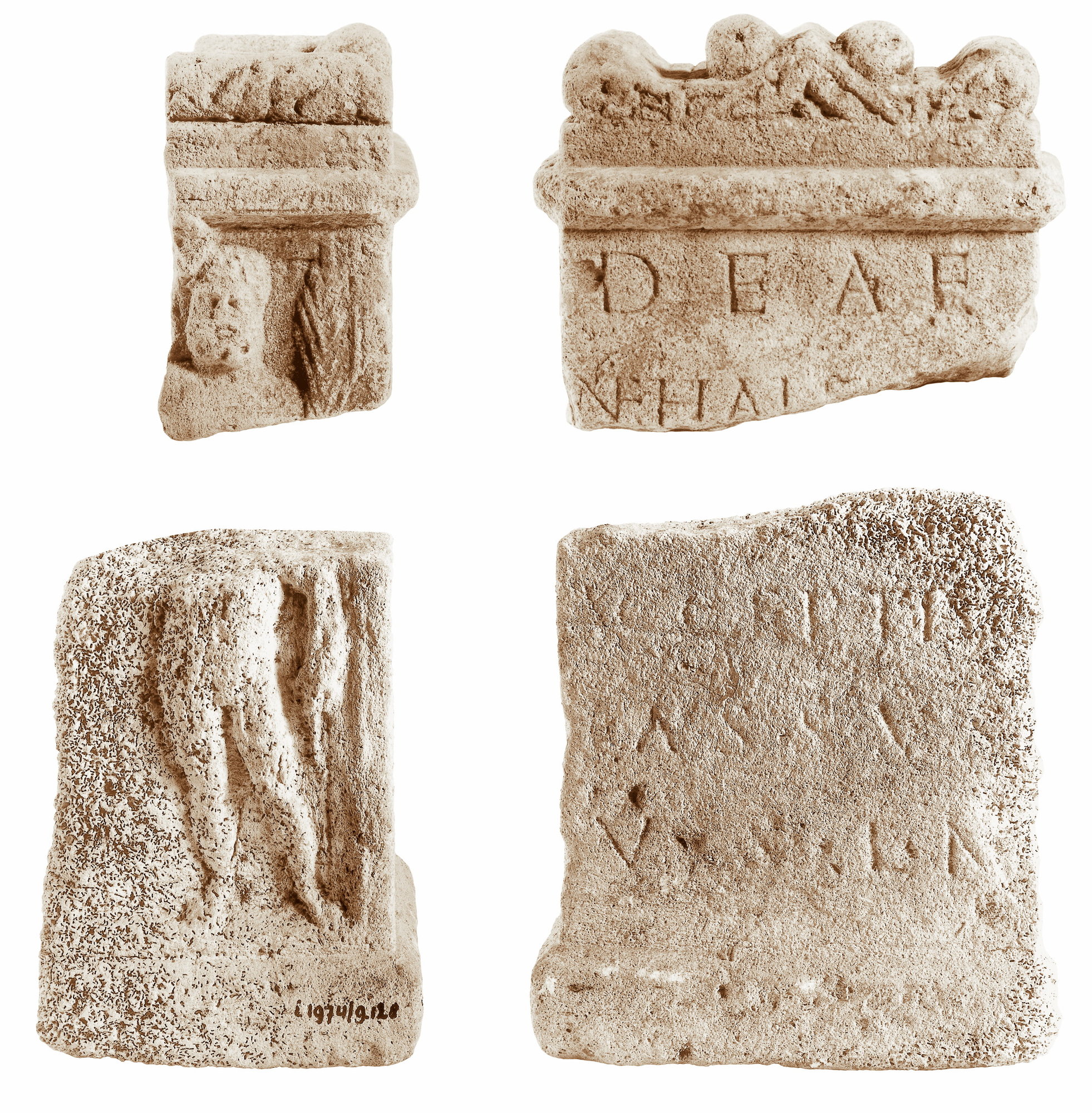
In 1647, after a storm near Domburg, the remains of a temple to the until then unknown goddess Nehalennia were discovered. Fifty reliefs and altars were found, thirty of them with inscriptions. Unfortunately, most of the altars were destroyed by a fire in 1848 in Domburg church, where the altar stones had been stored until then. Only 3 fragments have been preserved in the Zeeuws Museum and the KMKG in Brussels.
Fortunately, sketches and transcriptions have been preserved.
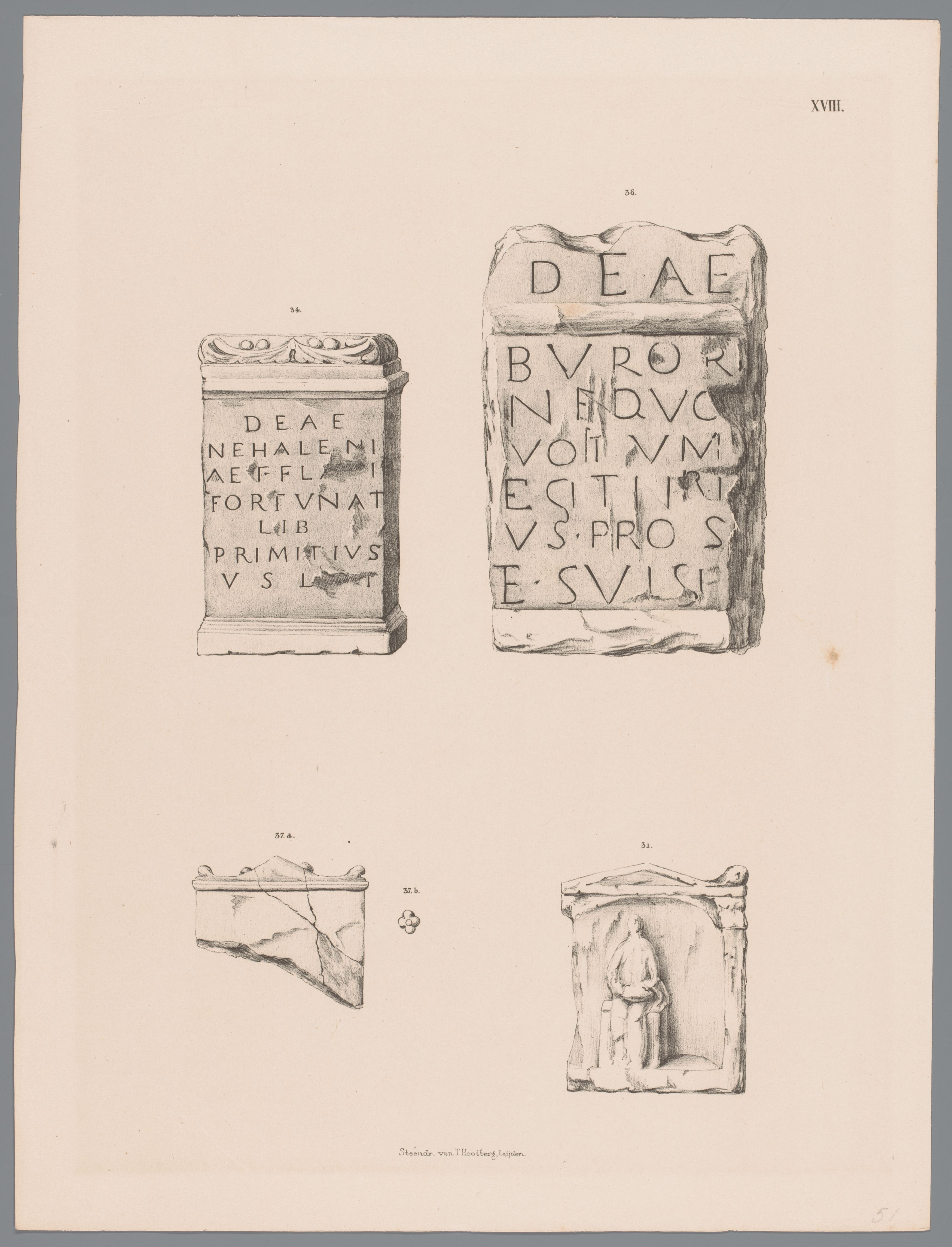
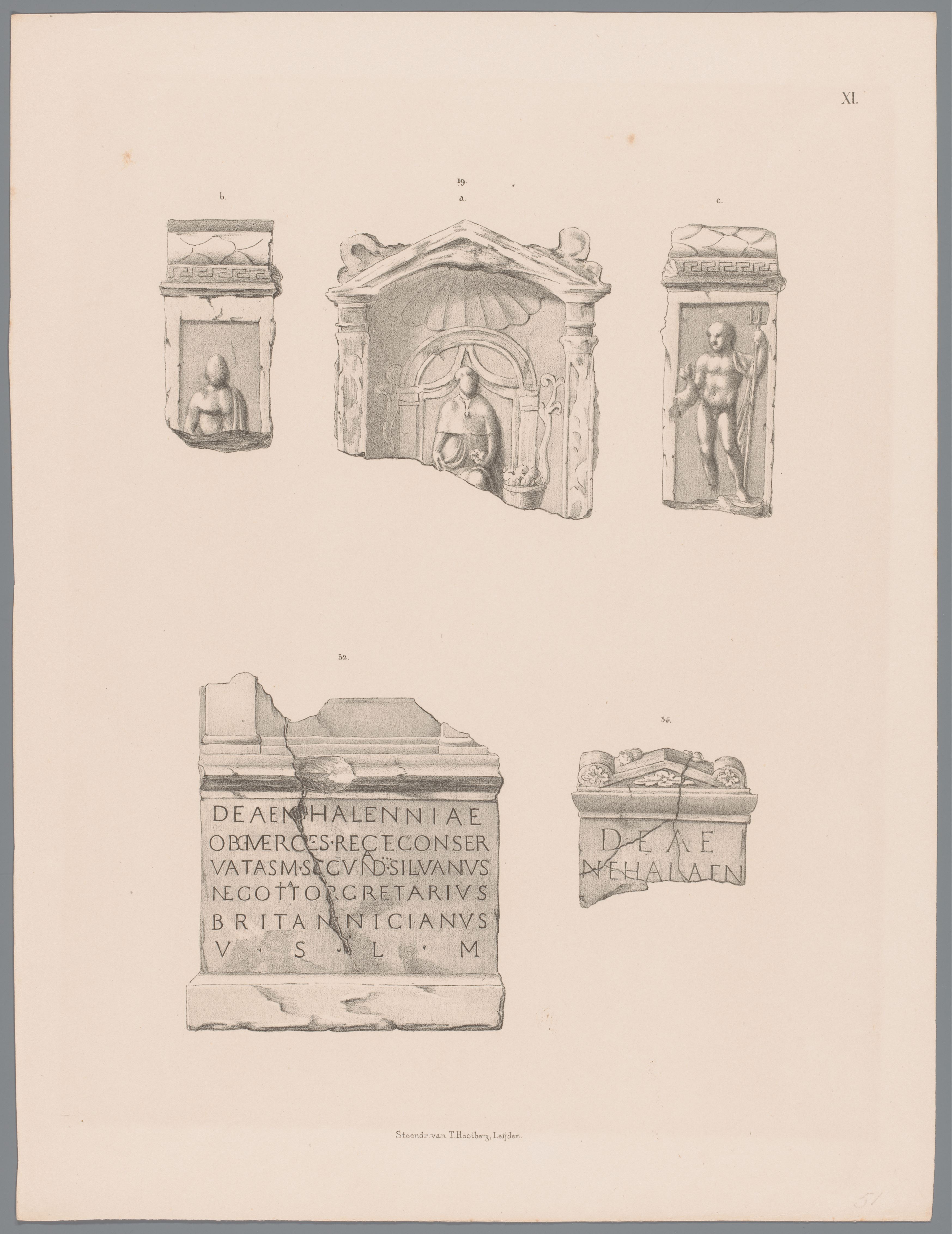
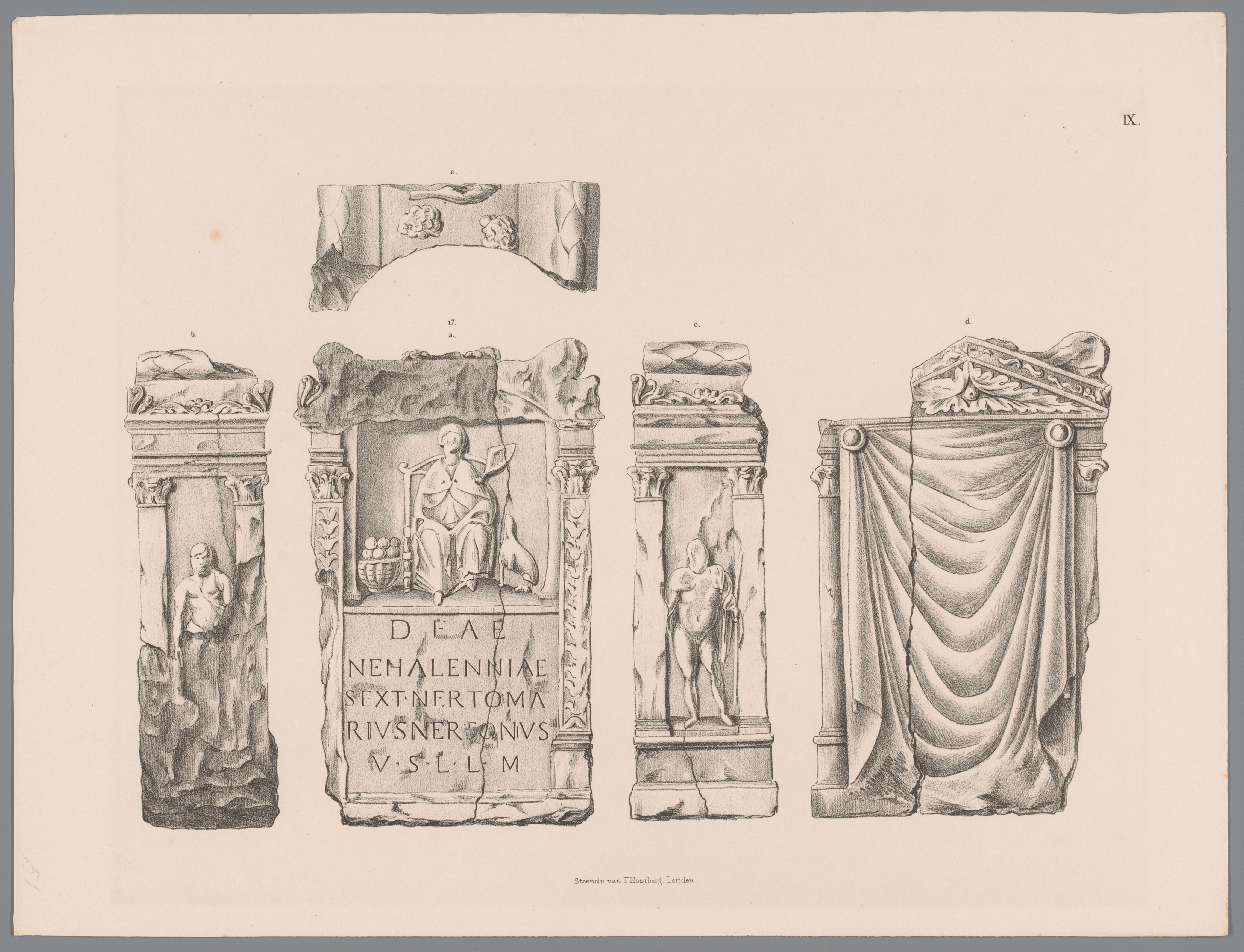
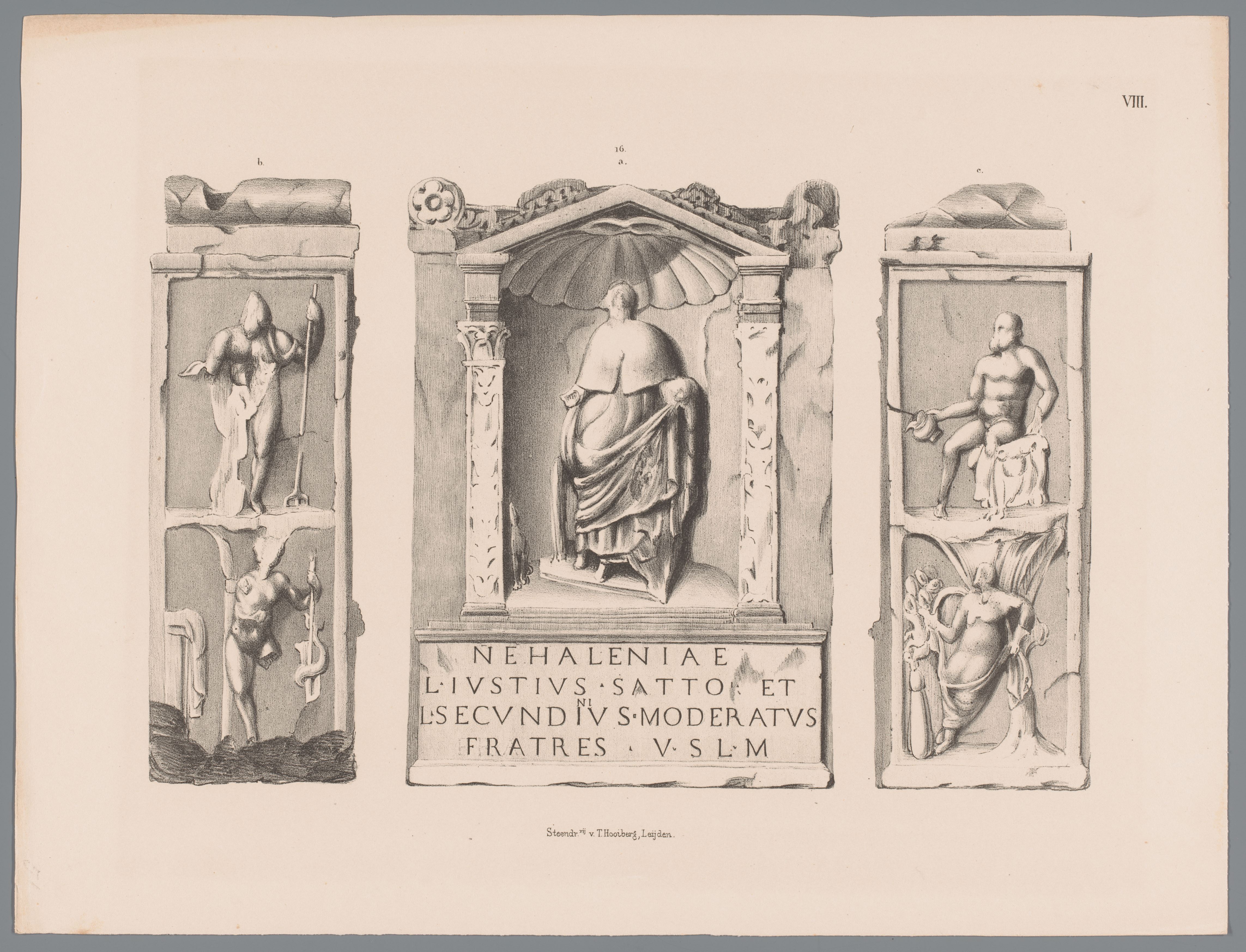
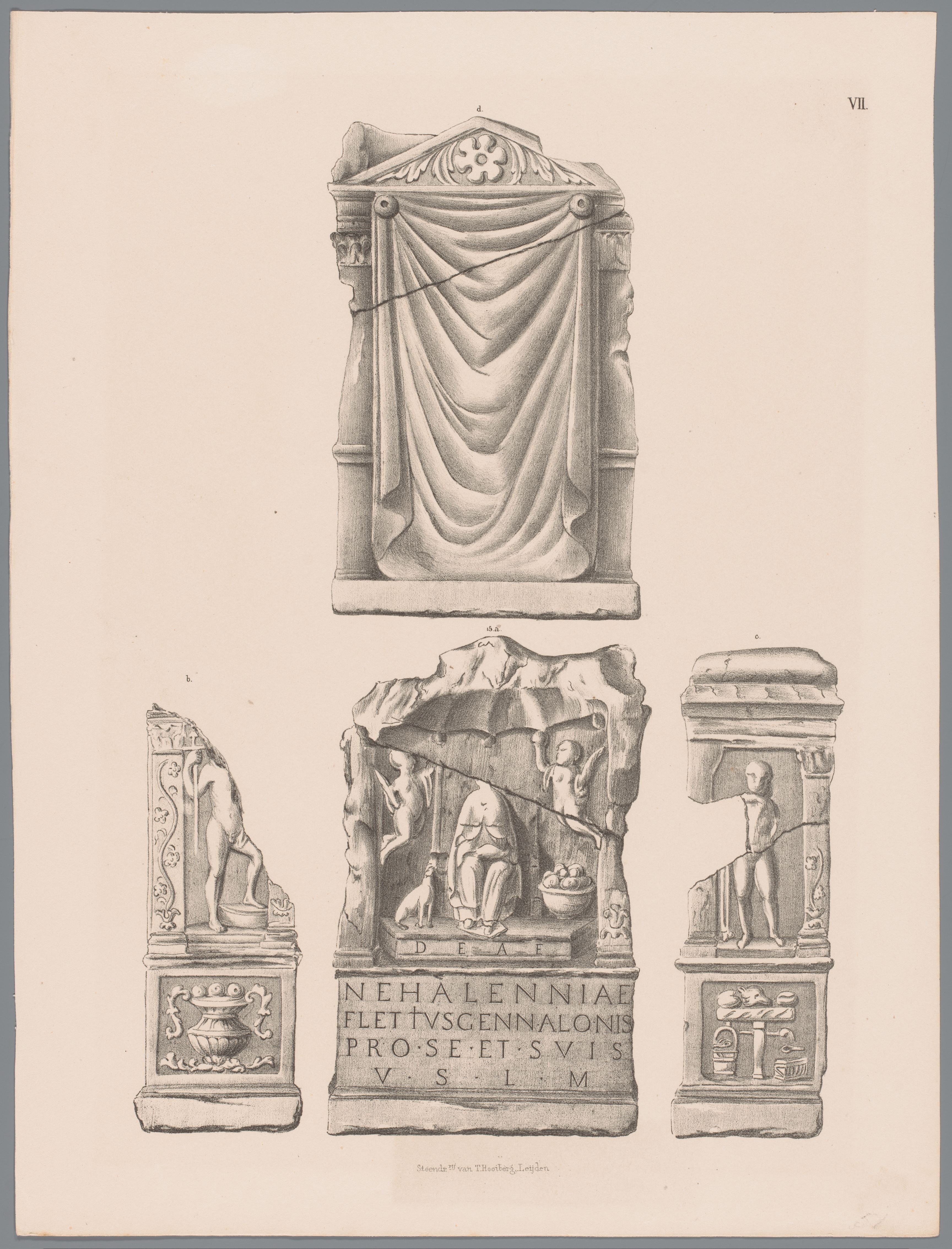
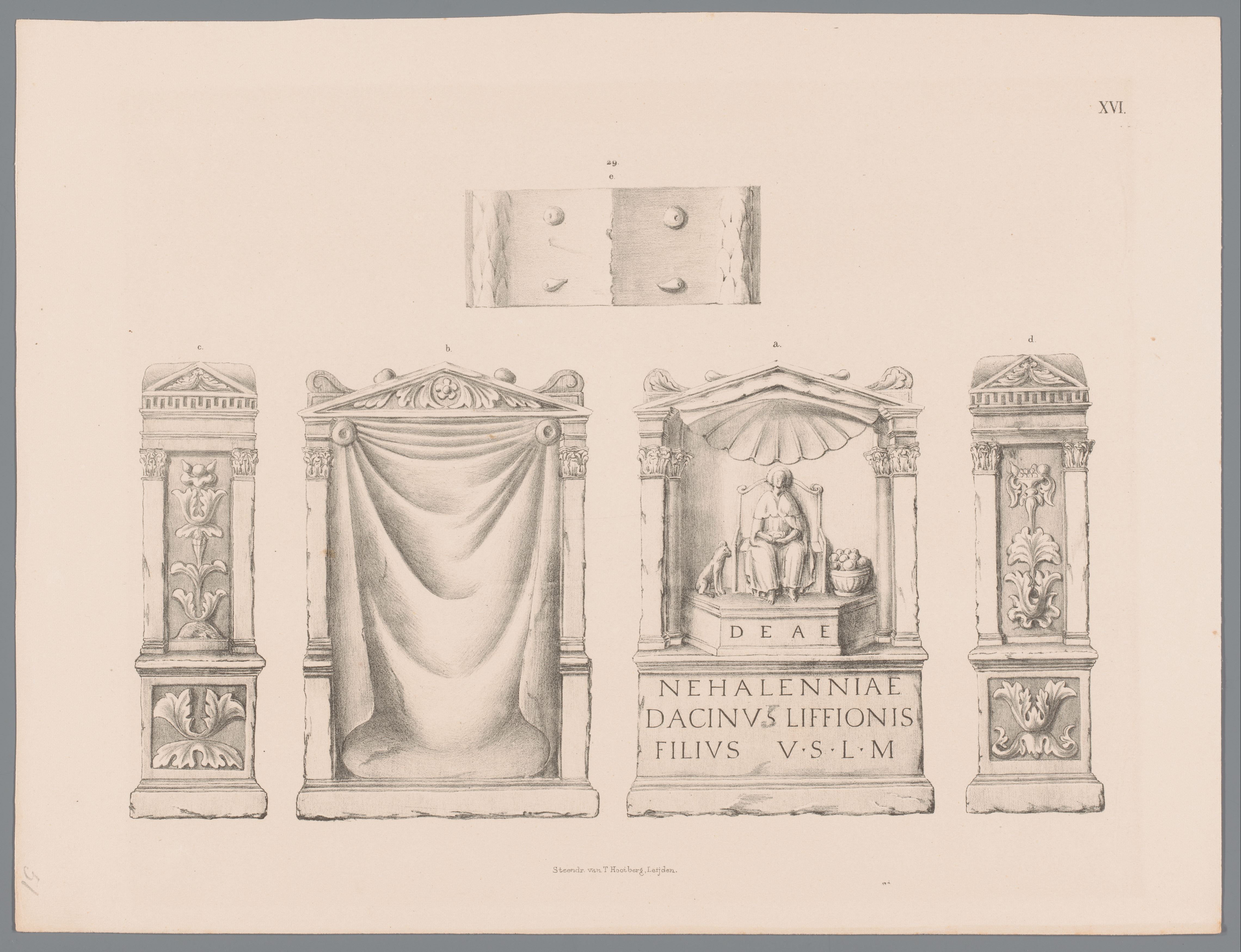
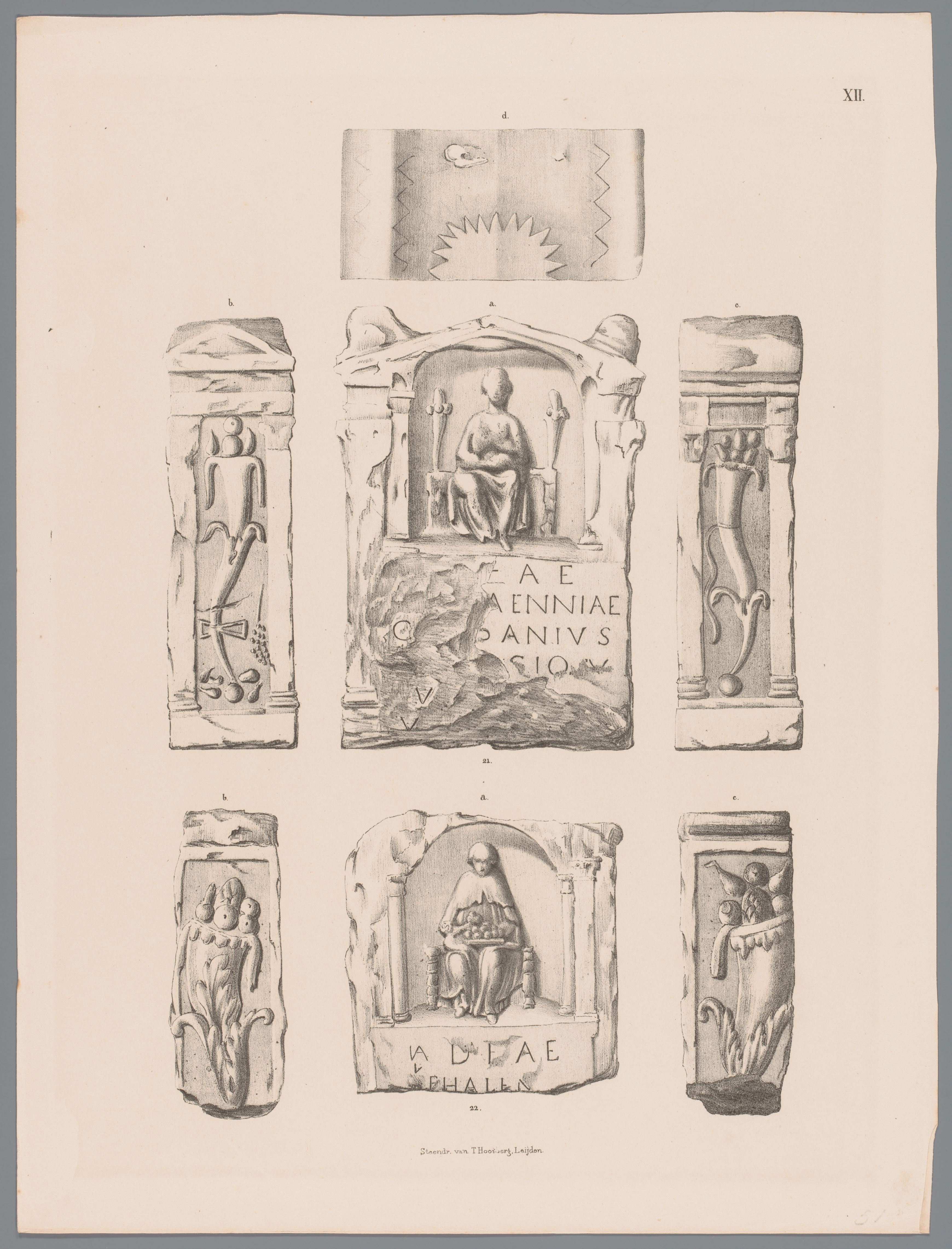
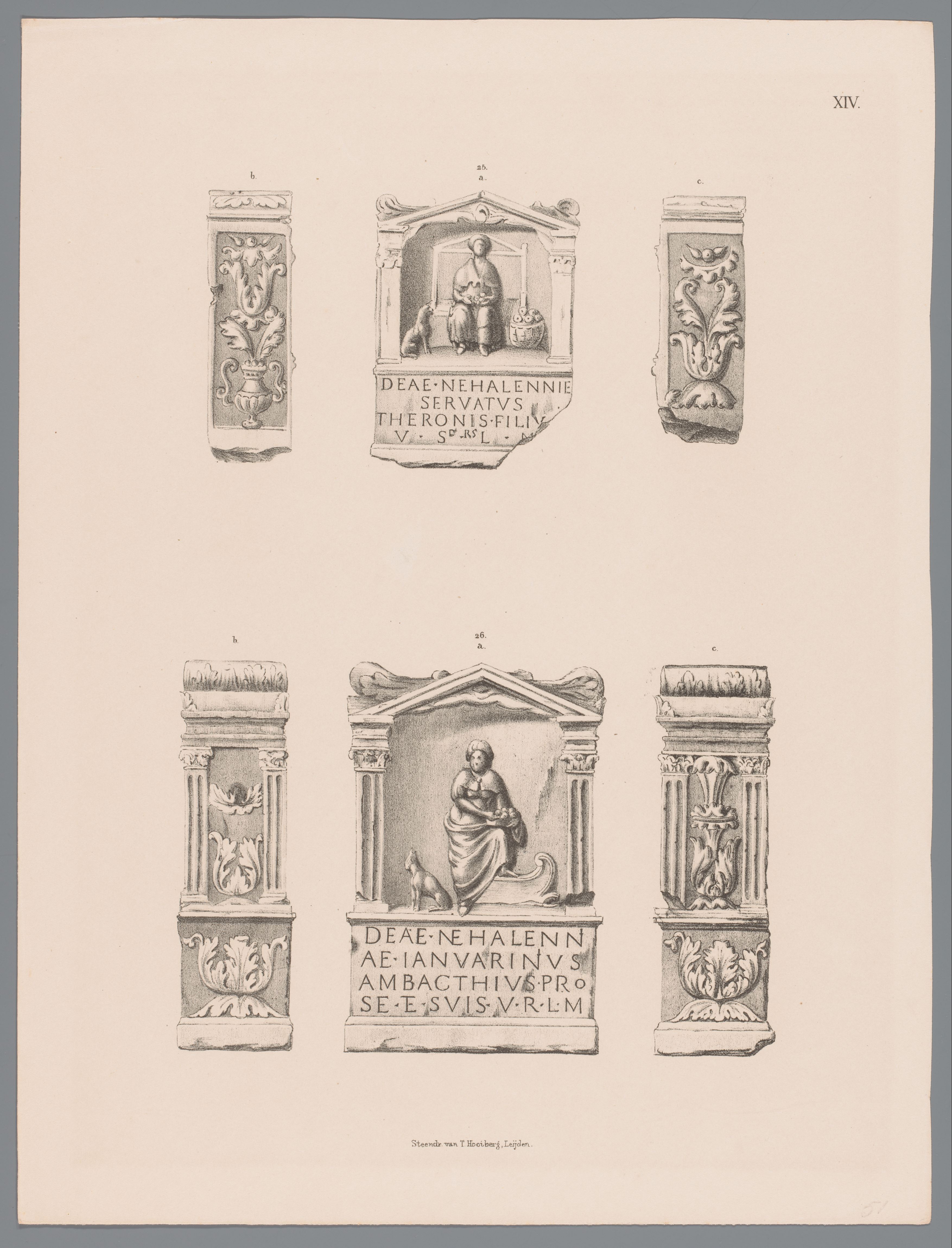
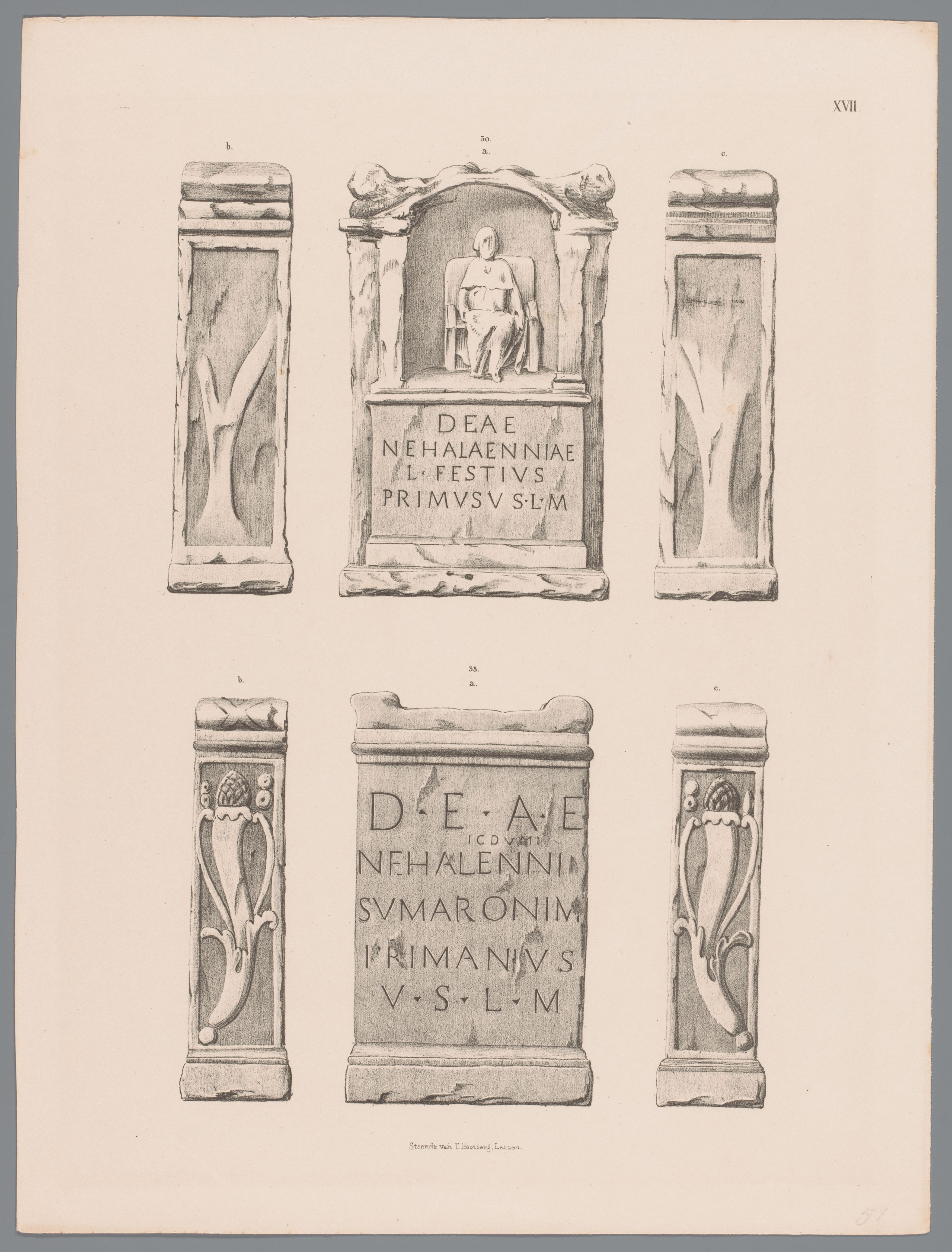
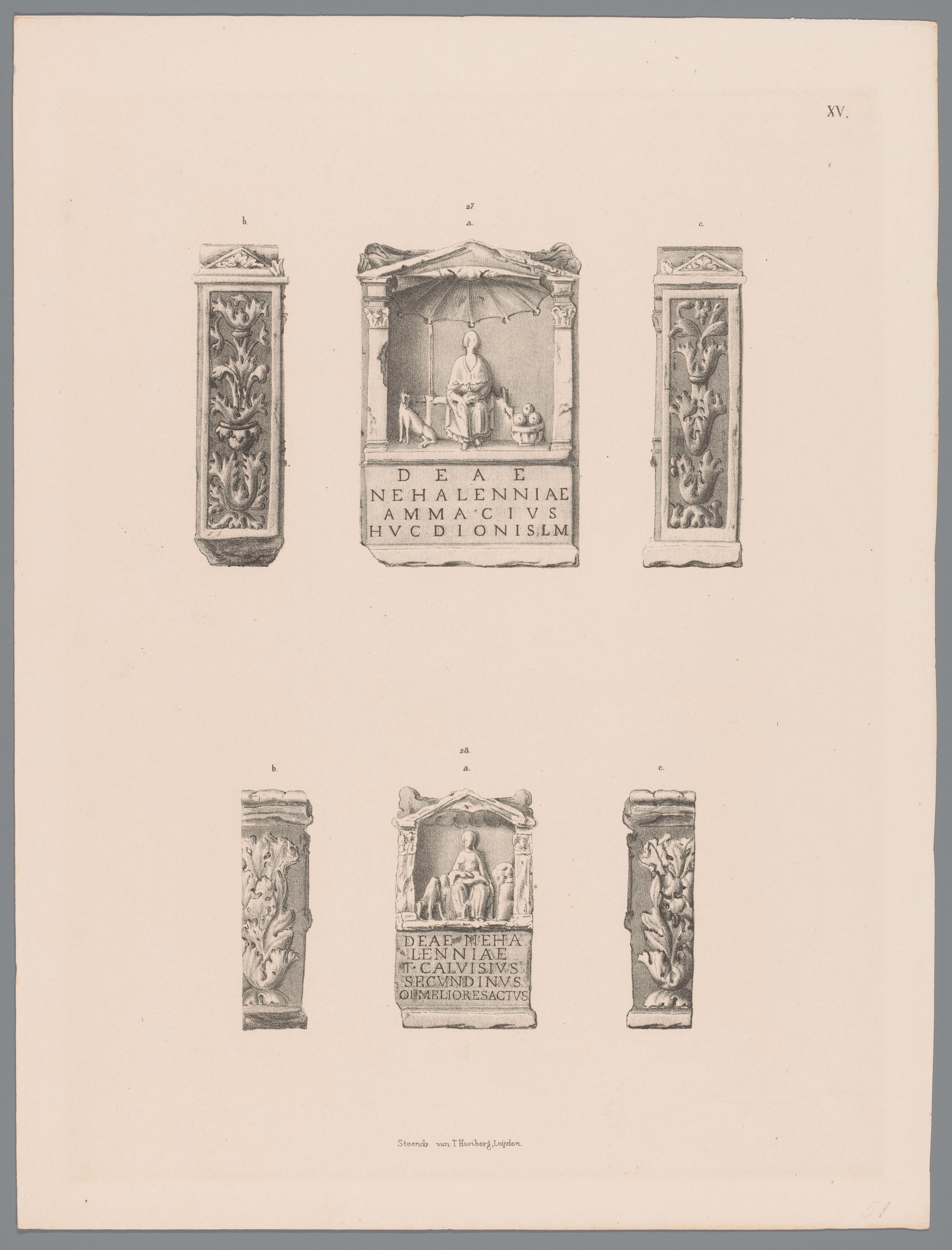
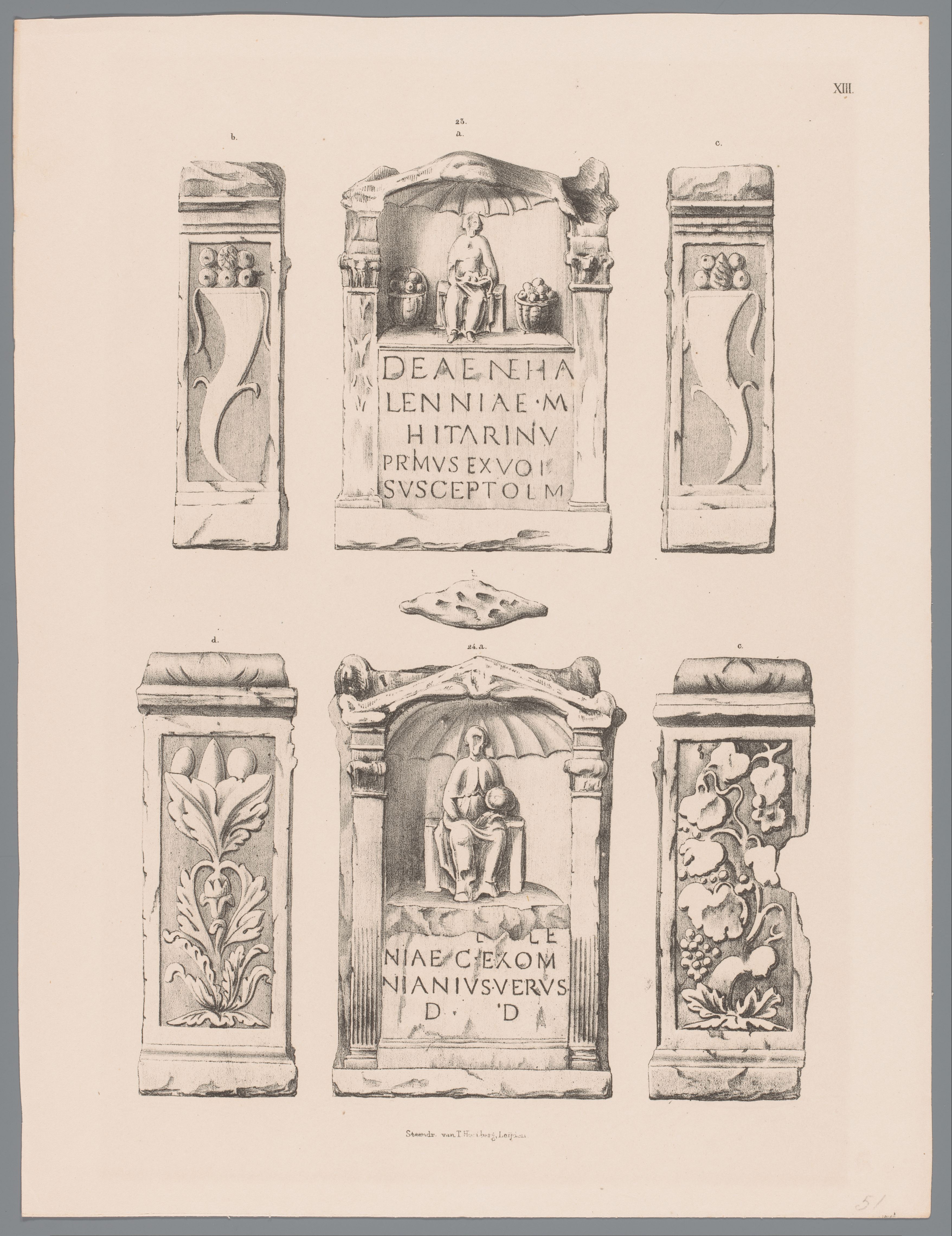
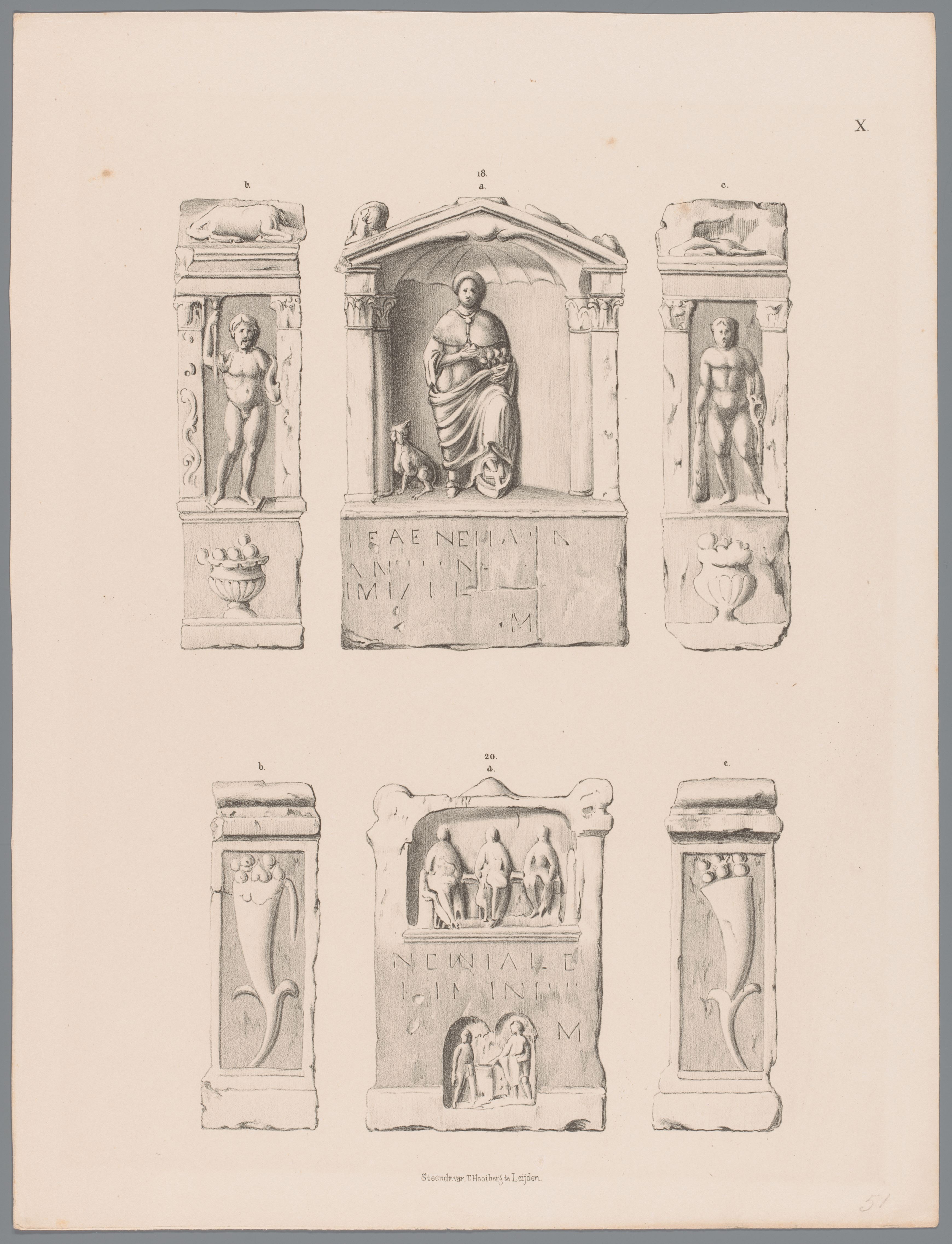
The temple probably stood in a wood (tree stumps have been found in the dunes), and lay in the territory of the Morini, a mainly Celtic tribe.
In 1776, two more altars were found in Cologne, Germany. These probably belonged to the workshop where the altars were manufactured. But these were unfortunately destroyed during the Second World War. Other altar stones were made in Xanten and Bingen.
On 14 April 1970, fisherman Kees Bout suddenly found a new altar stone of the goddess in his net. It turned out to come from a temple in the submerged Roman settlement of Ganuenta, just off present-day Colijnsplaat. The settlement lay in the territory of the Frisiavones or the Menapii (the exact areas are uncertain, and there is debate about this). In the following years a total of 311 altar fragments and 14 statues were dredged up. 122 of these altars are housed in the Rijksmuseum van Oudheden in Leiden, and some of them are on public display.
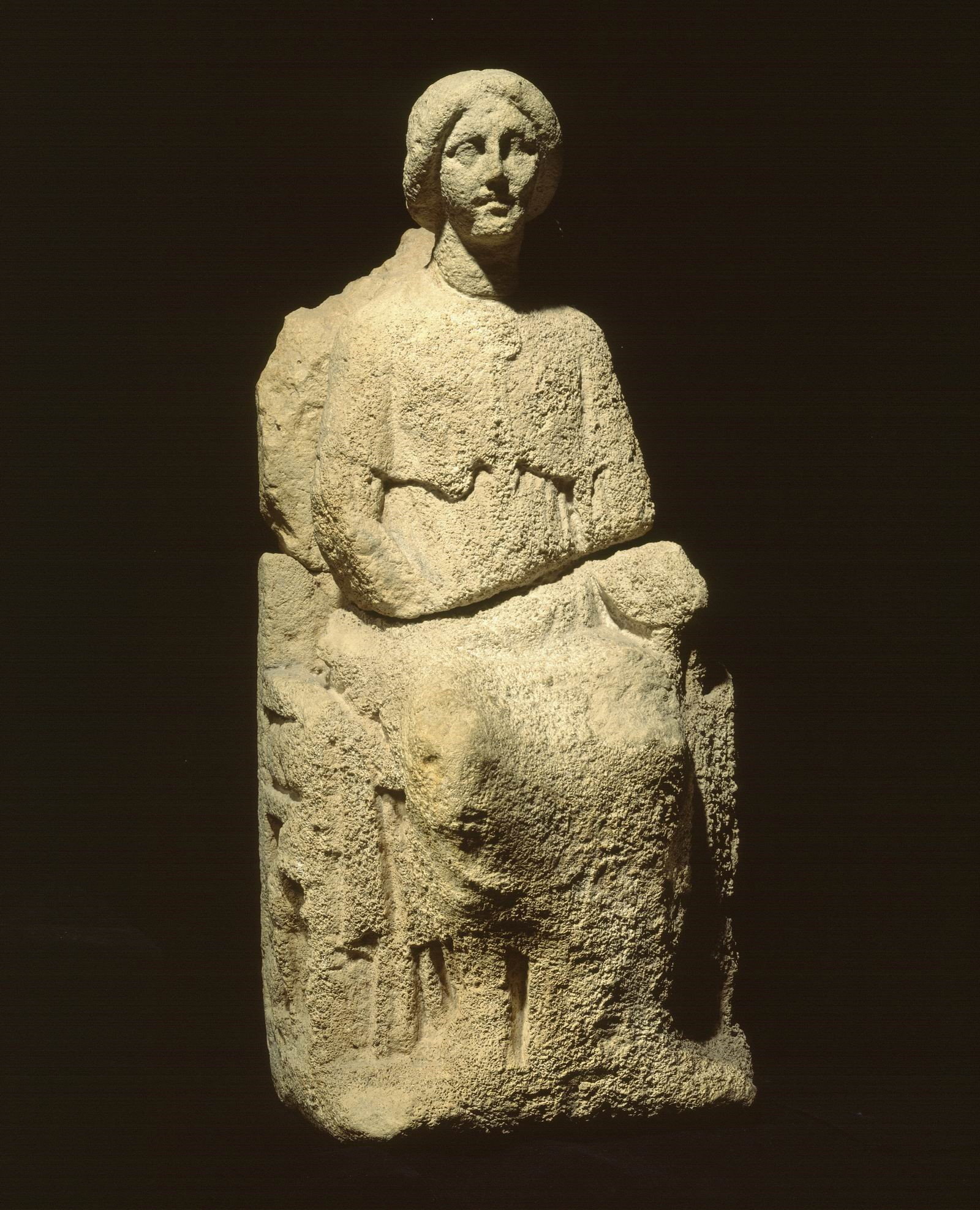
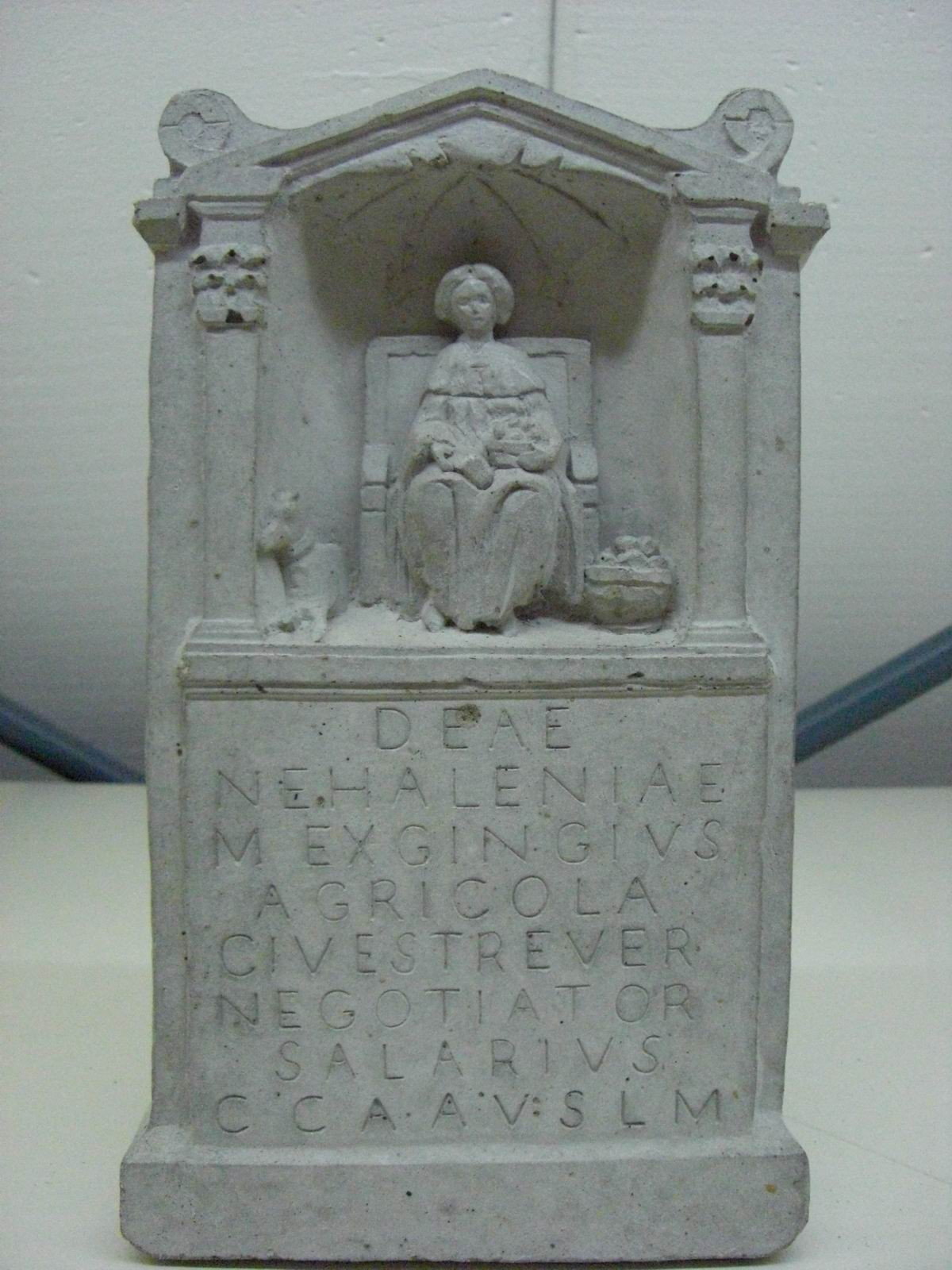
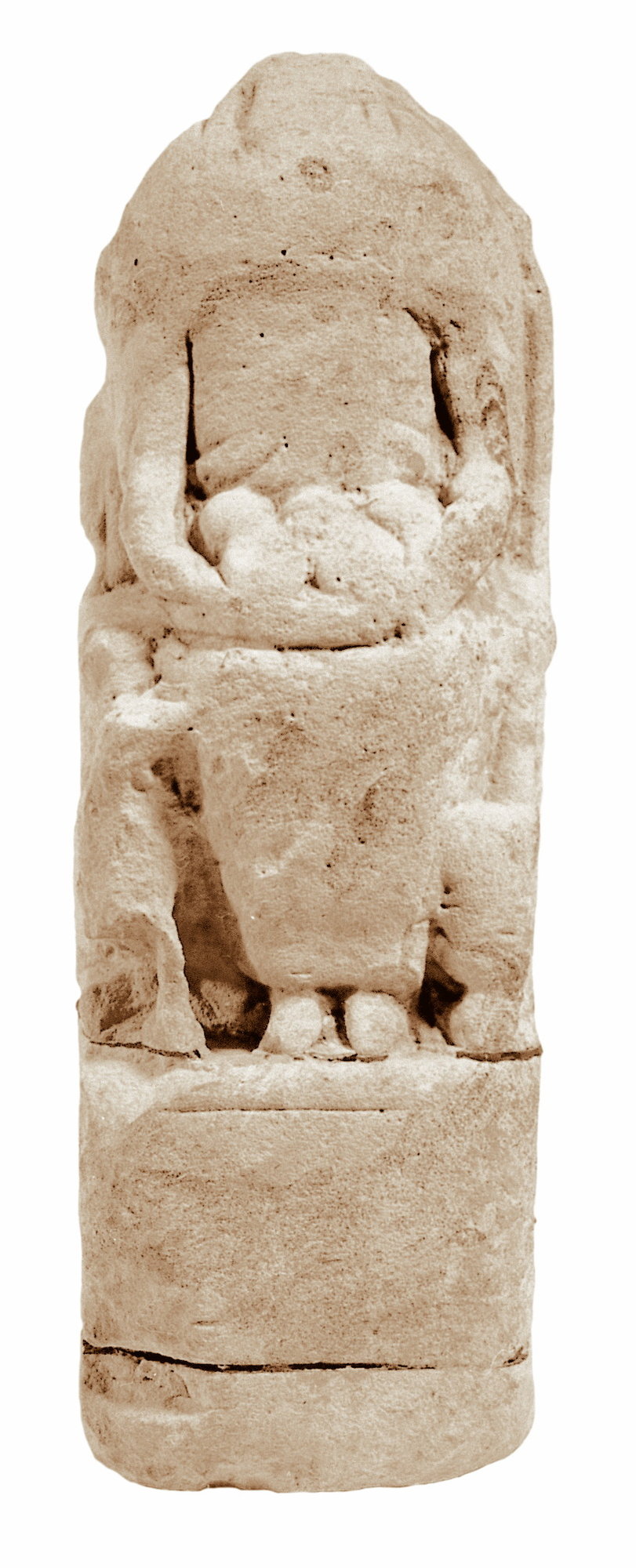
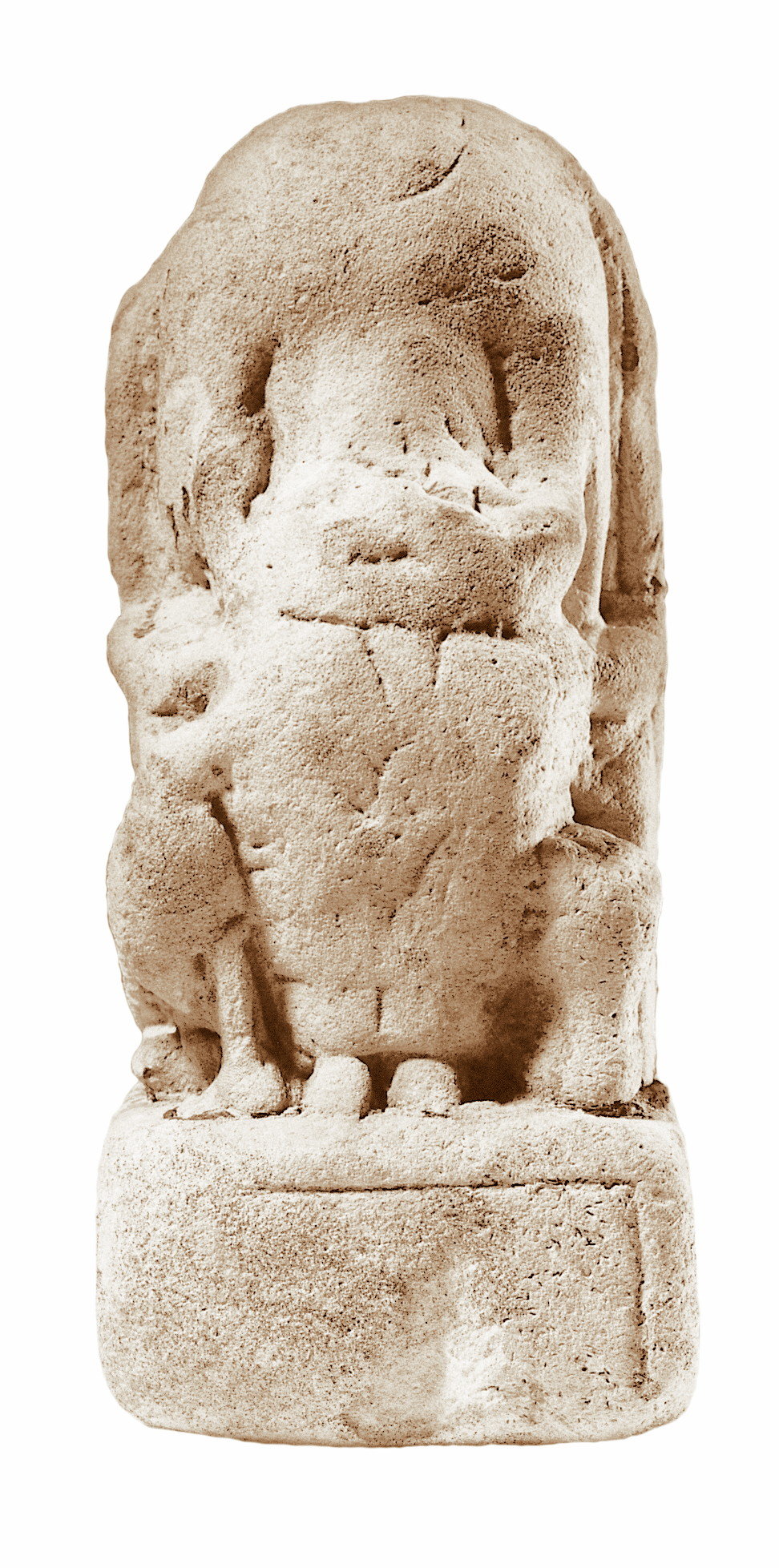
It is suspected that a third temple may have existed near Haamstede/Westerschouwen. But this has not been confirmed to date.
Based on consular datings of some stones, we know that the temple in Colijnsplaat was in use at least in the 2nd and 3rd centuries.
Iconography
On most votive stones Nehalennia is depicted as a young woman seated on a throne in a stylised niche with a shell-shaped roof. She usually has a basket of fruit (apples, pears, grapes, pomegranates and ears of corn) on her lap or beside her, and in some depictions she holds a staff. We often also see a dog at her side looking up at her.
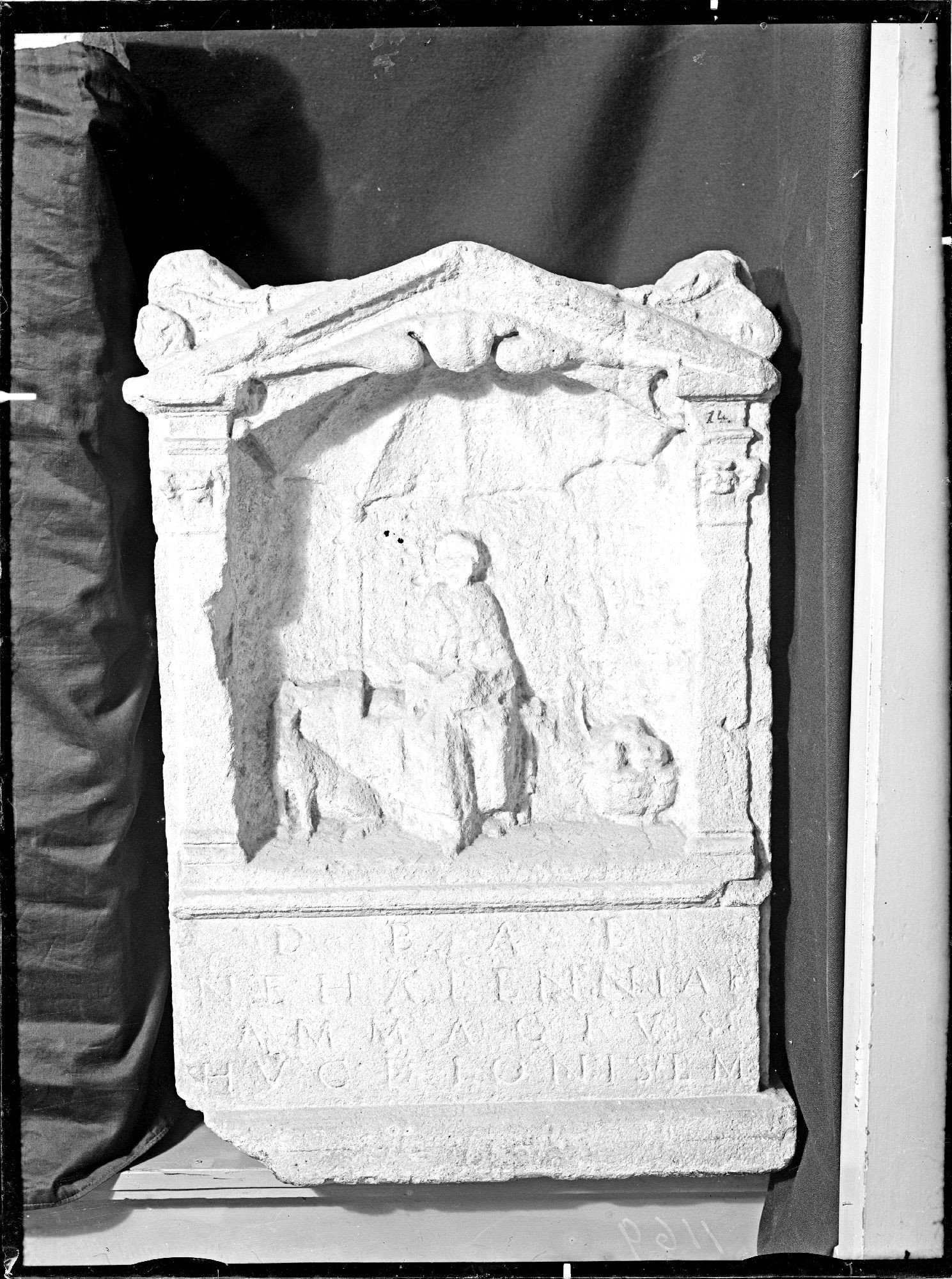
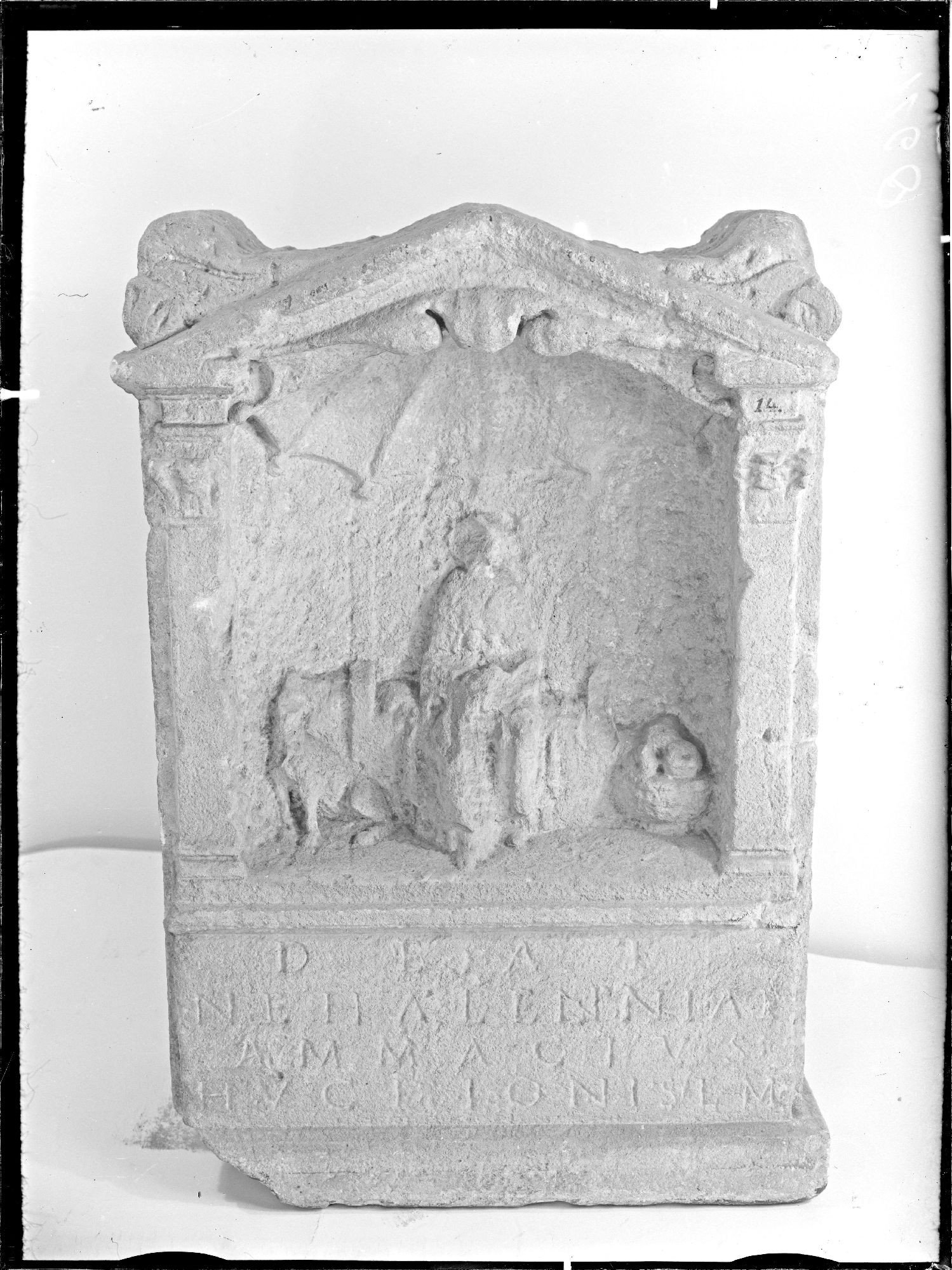
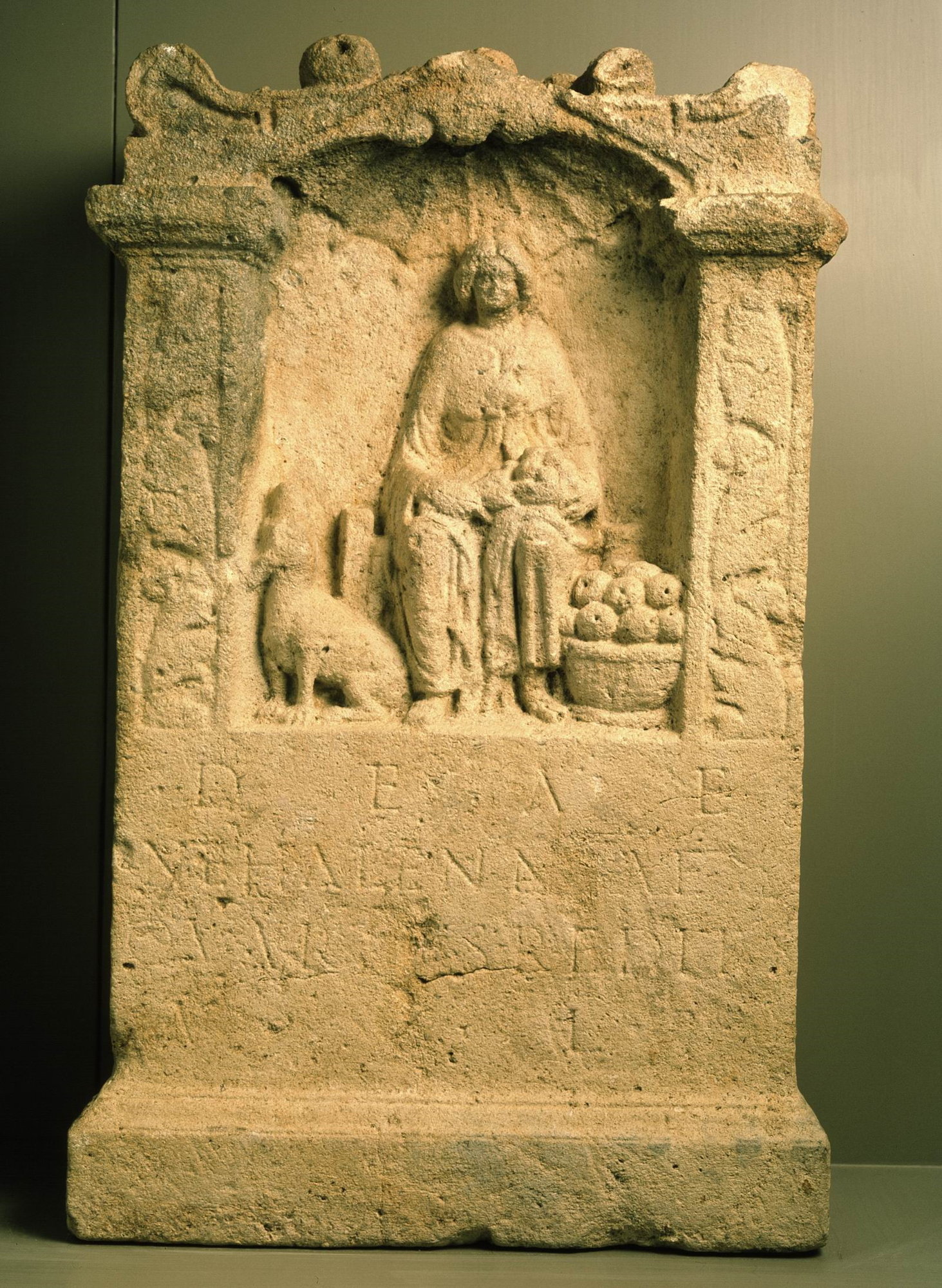
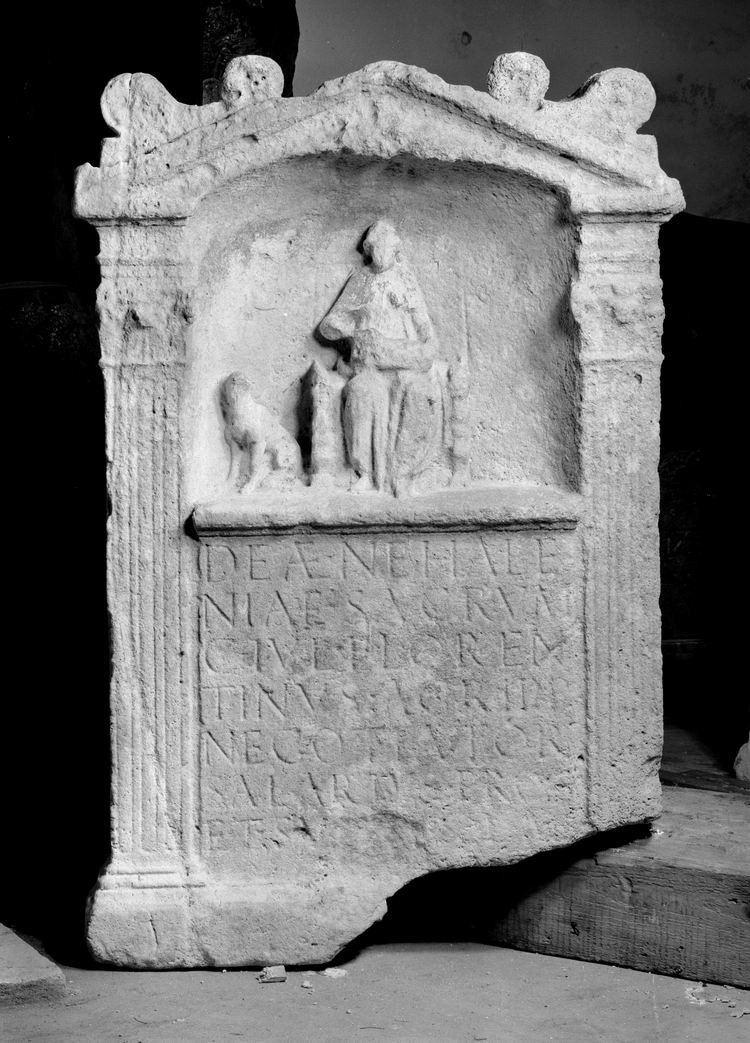
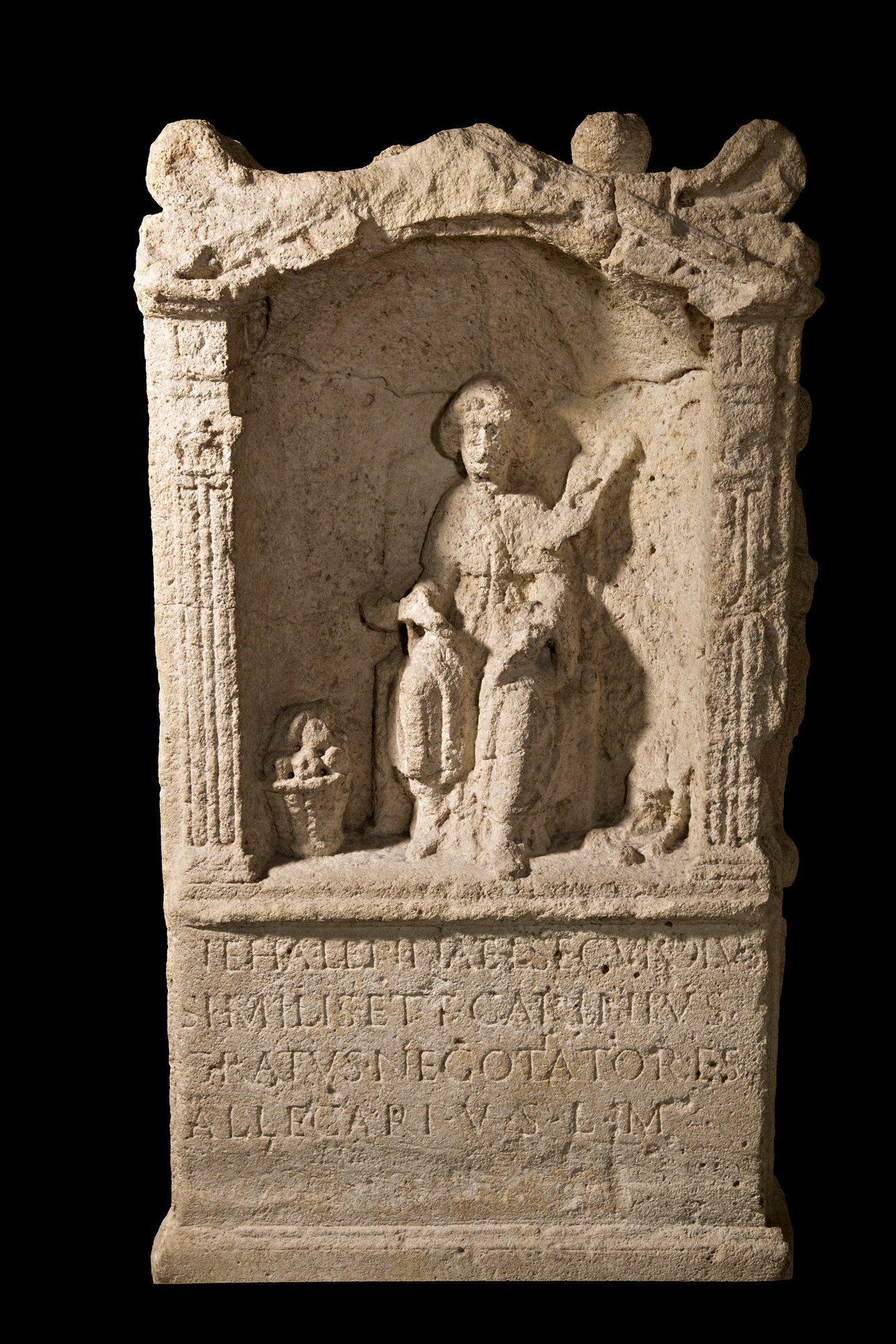
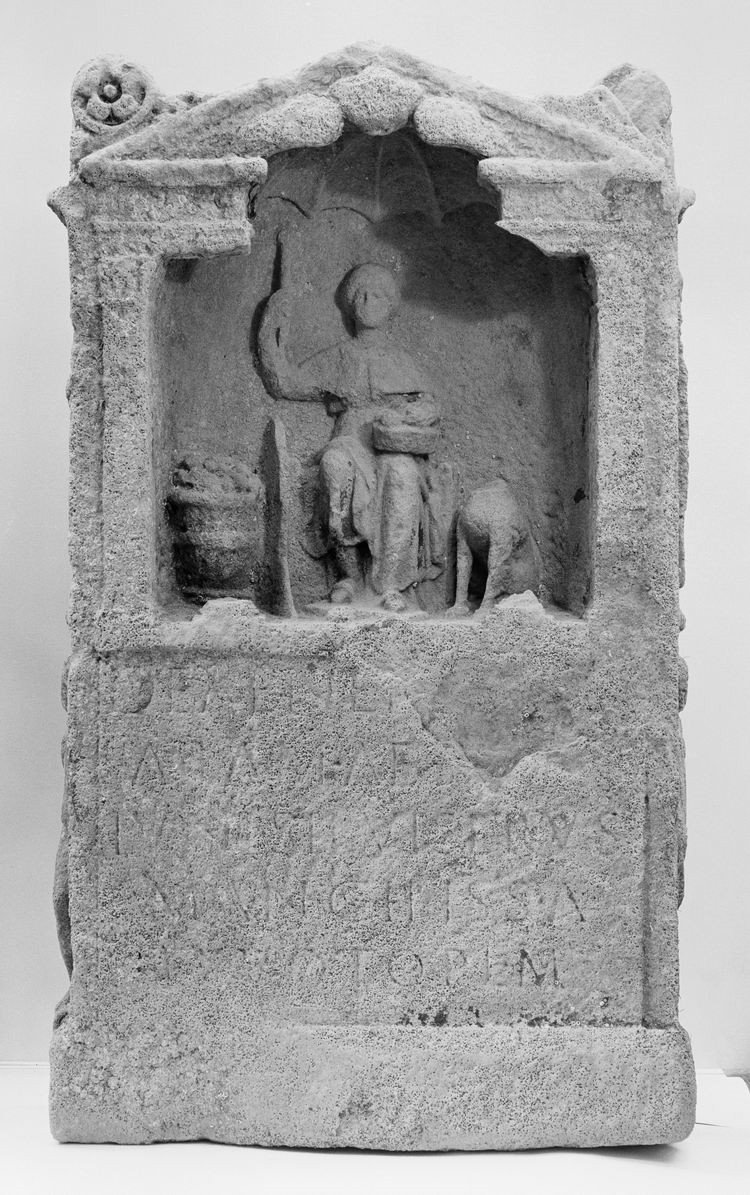
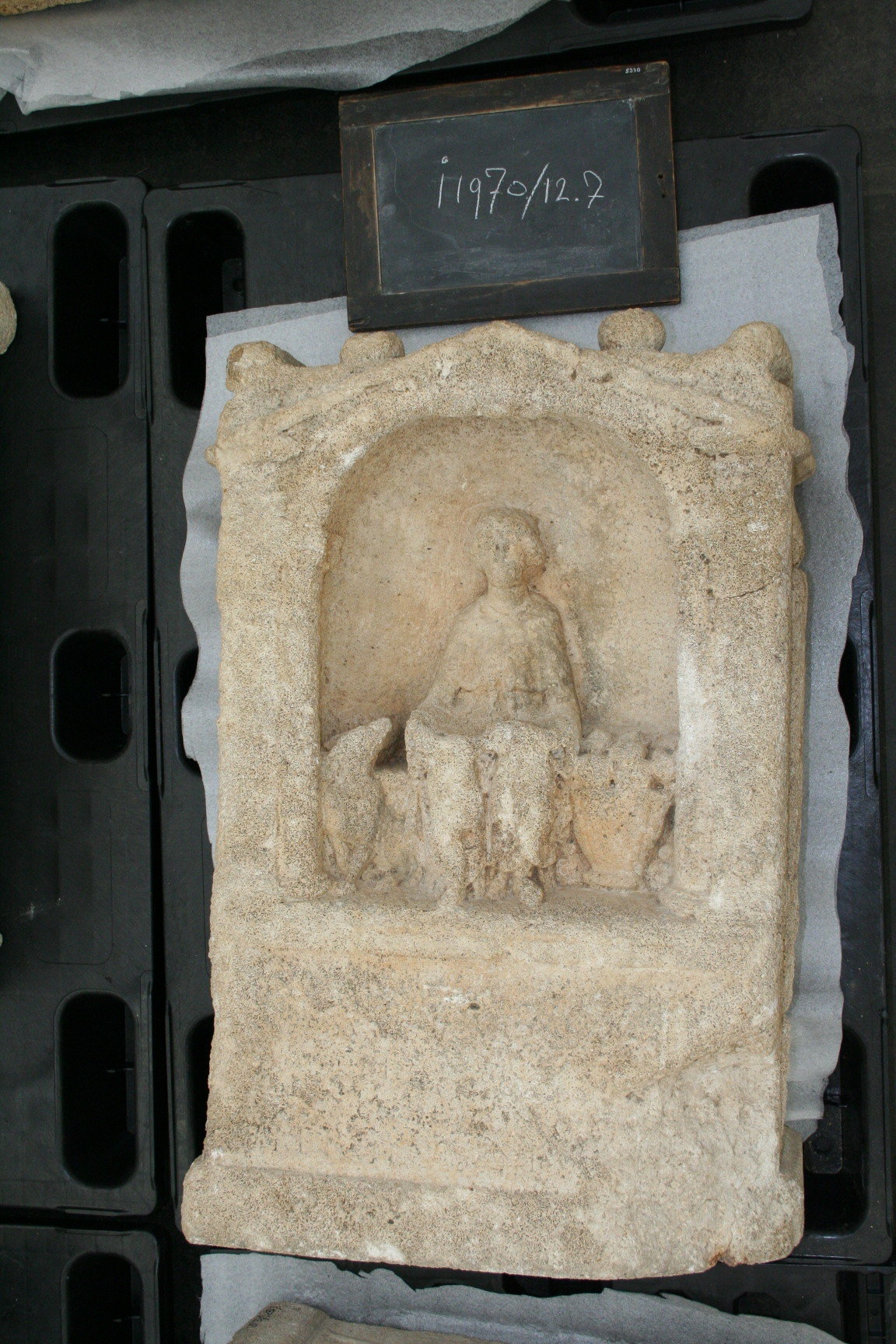
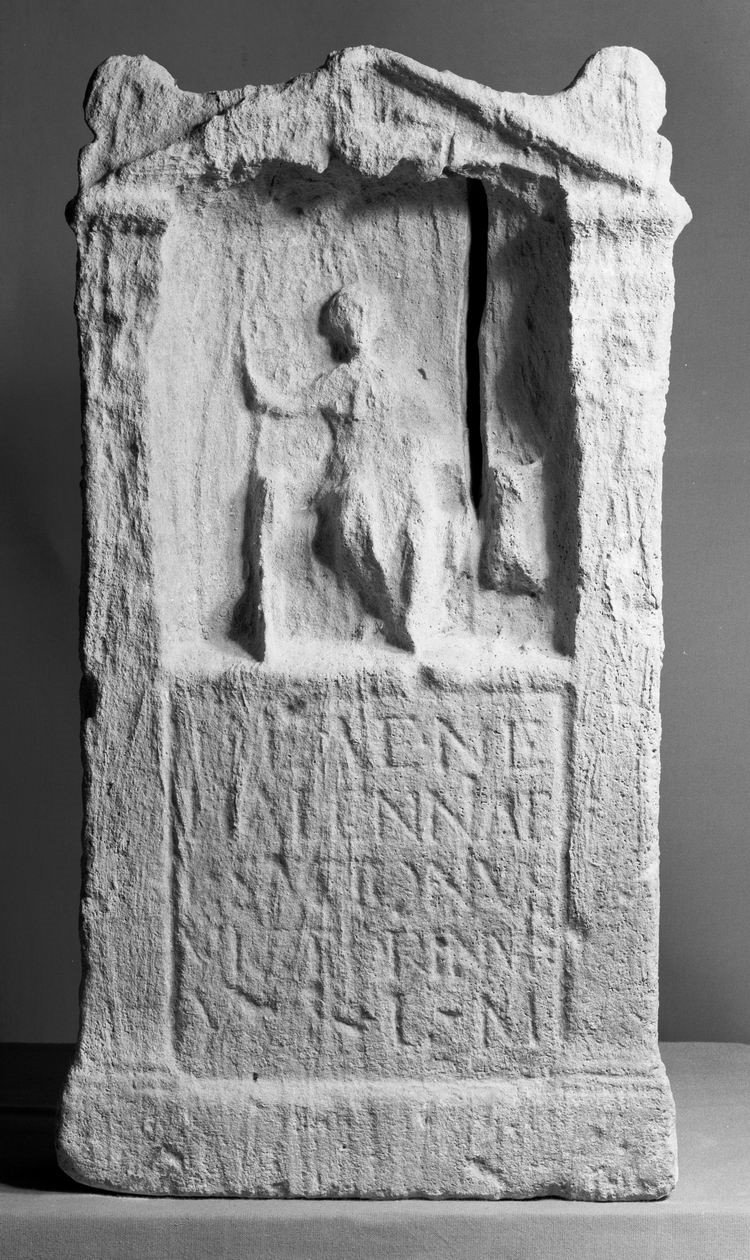
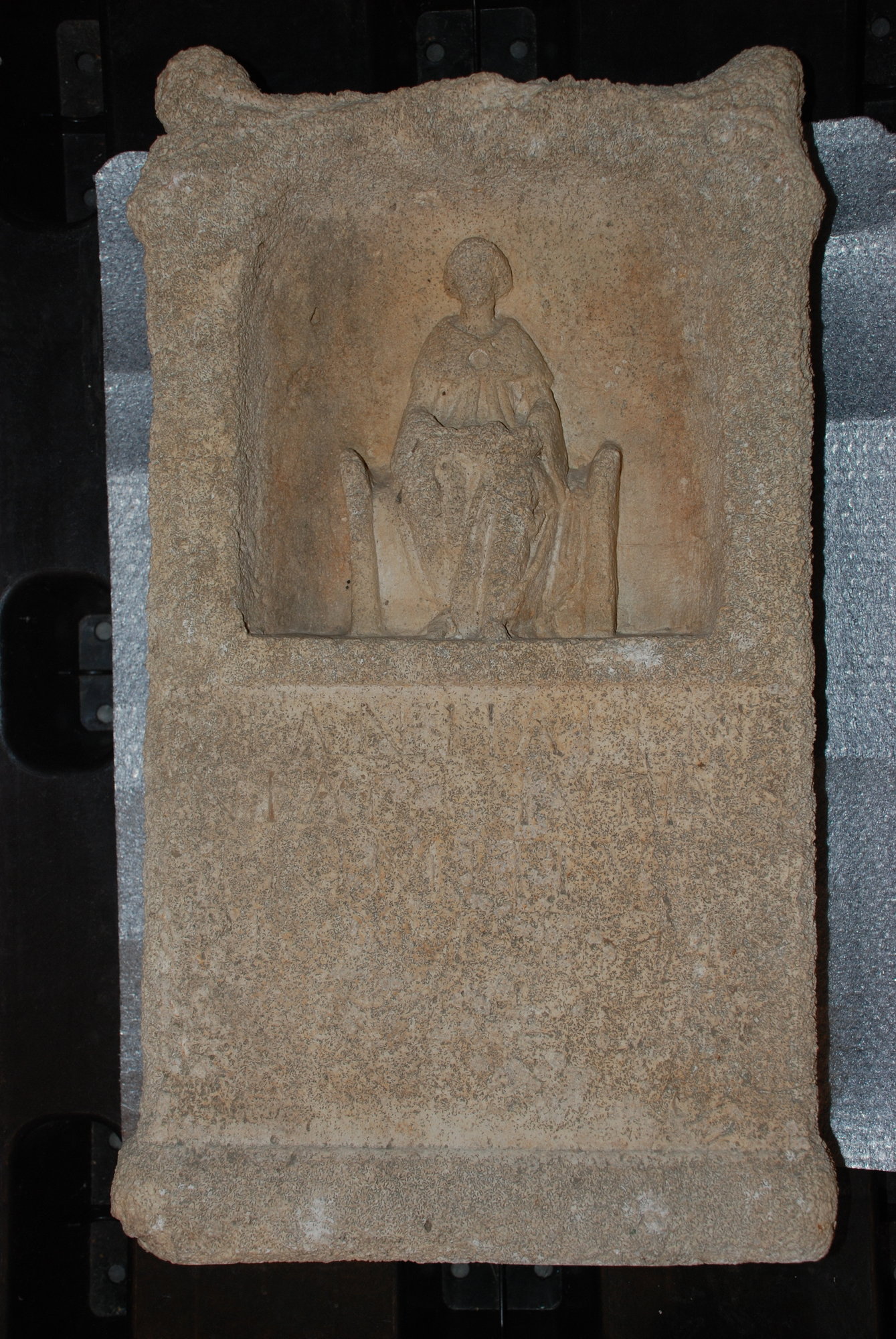
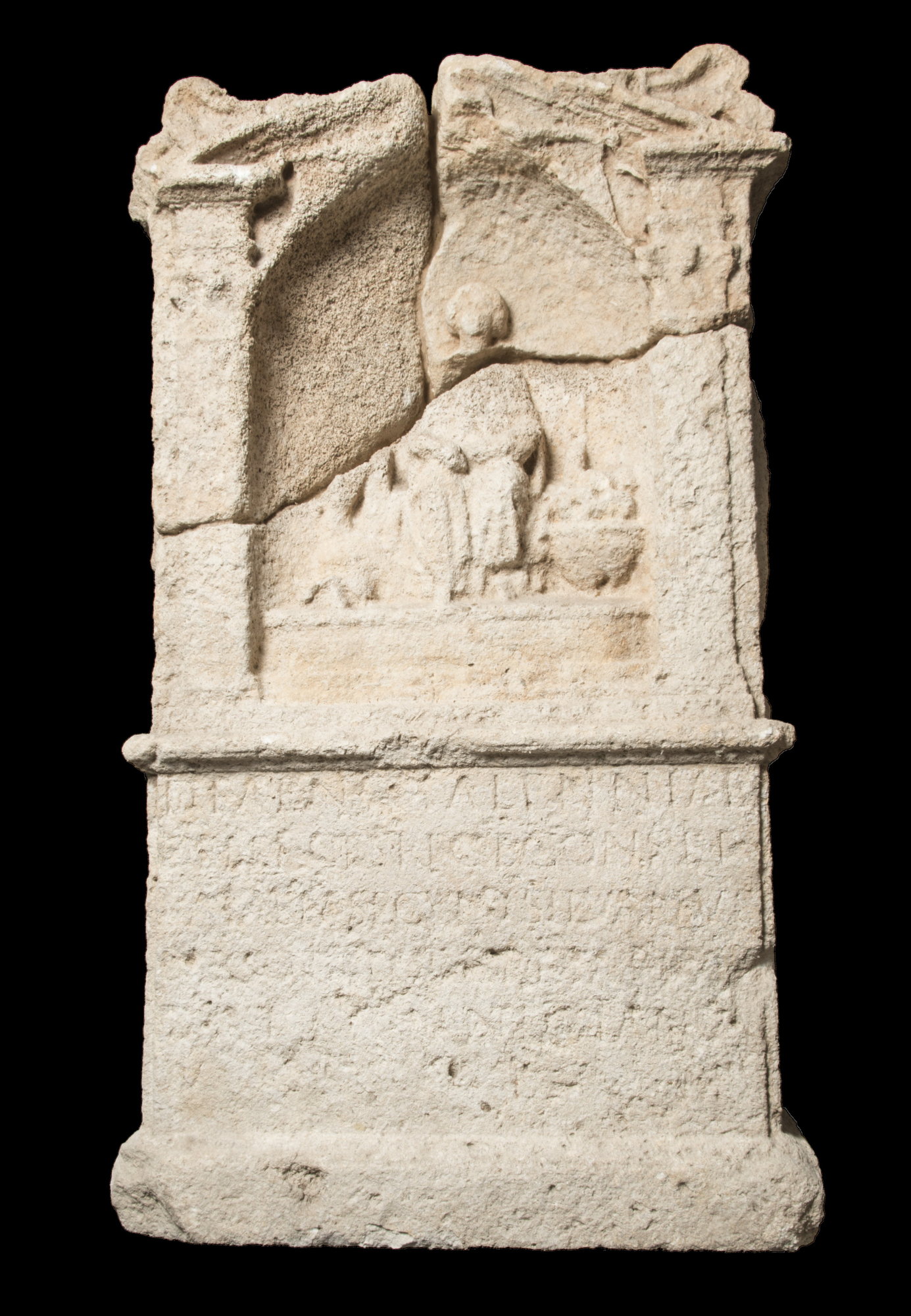
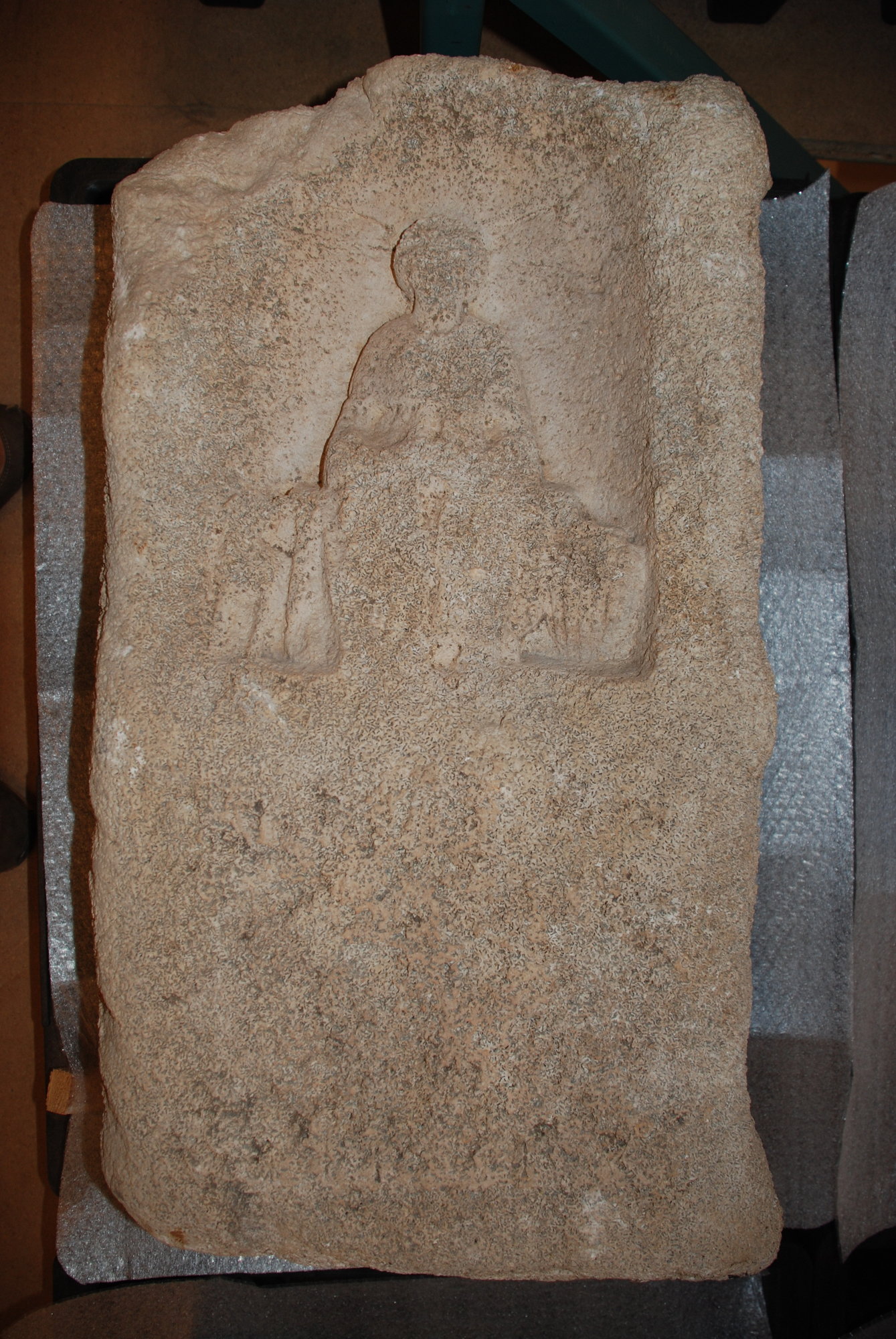
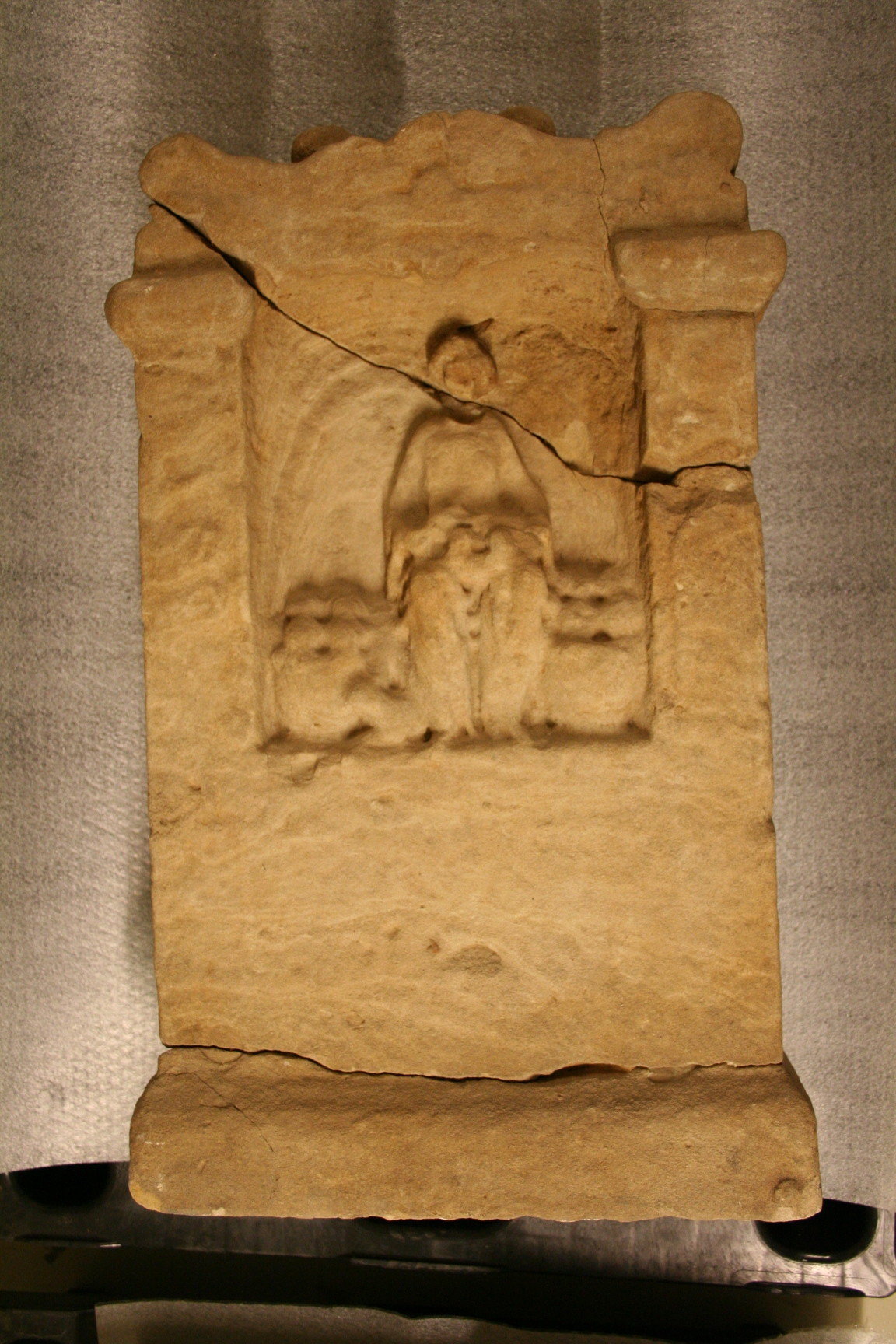
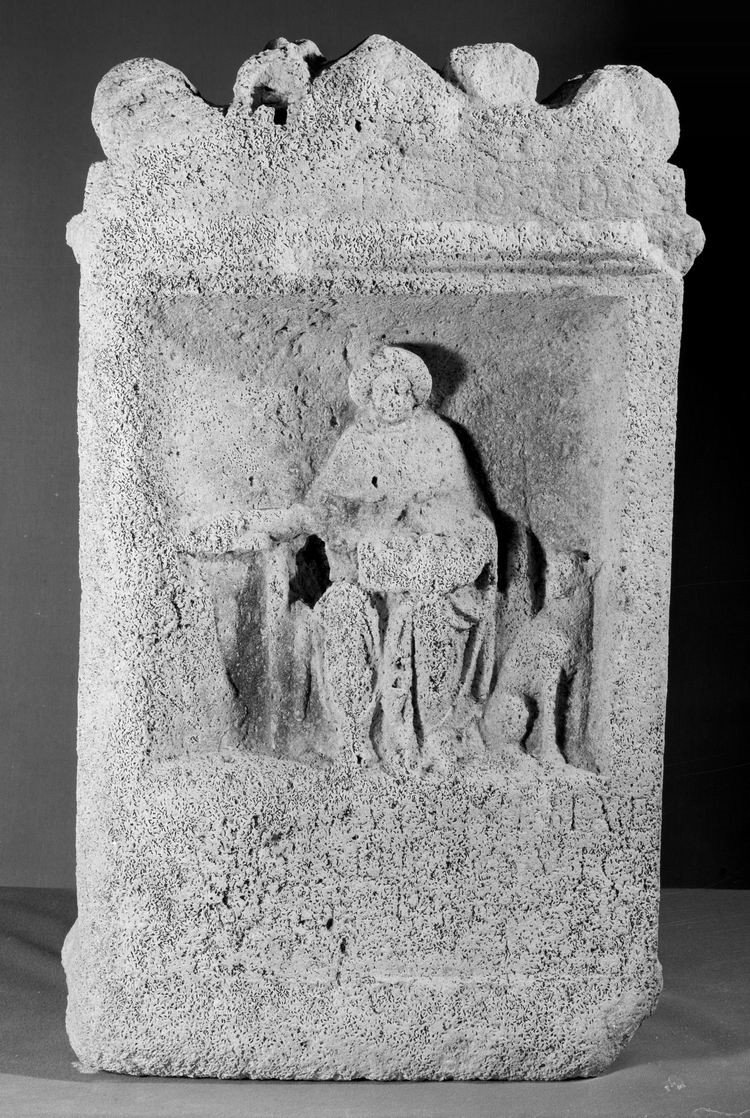
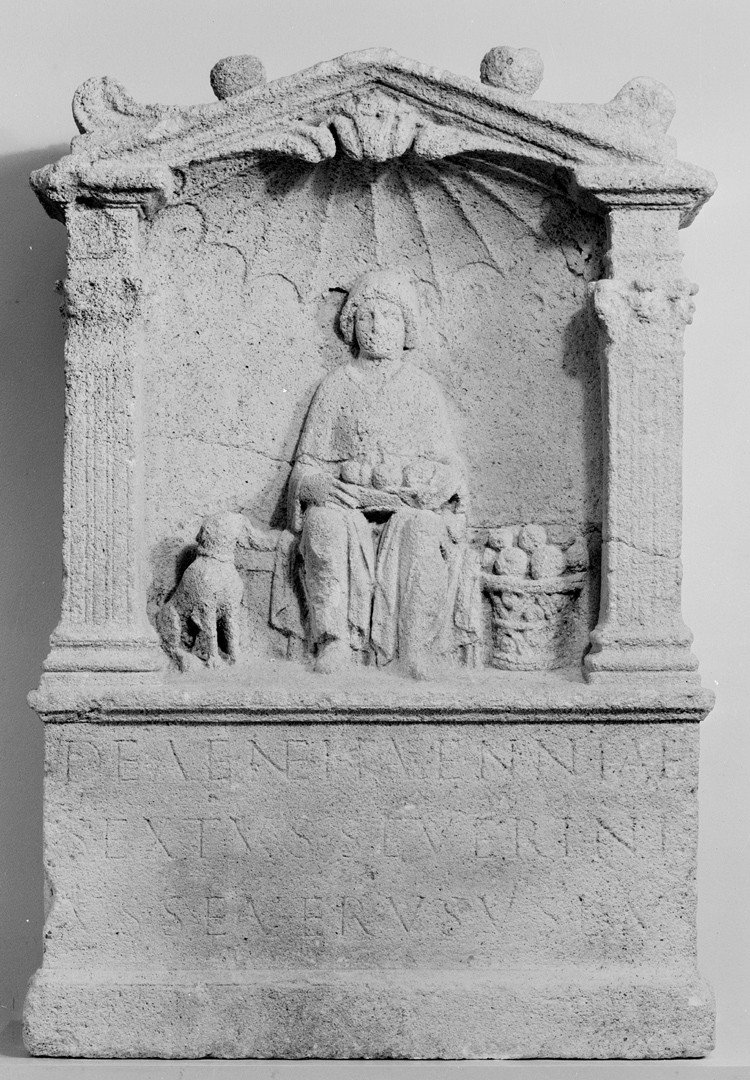
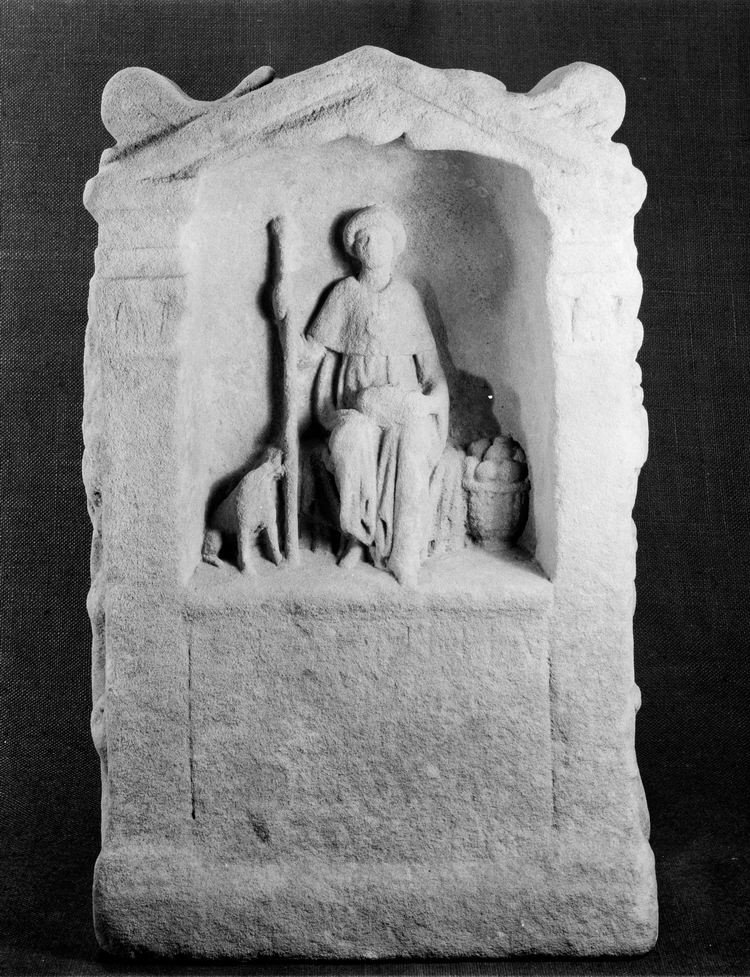
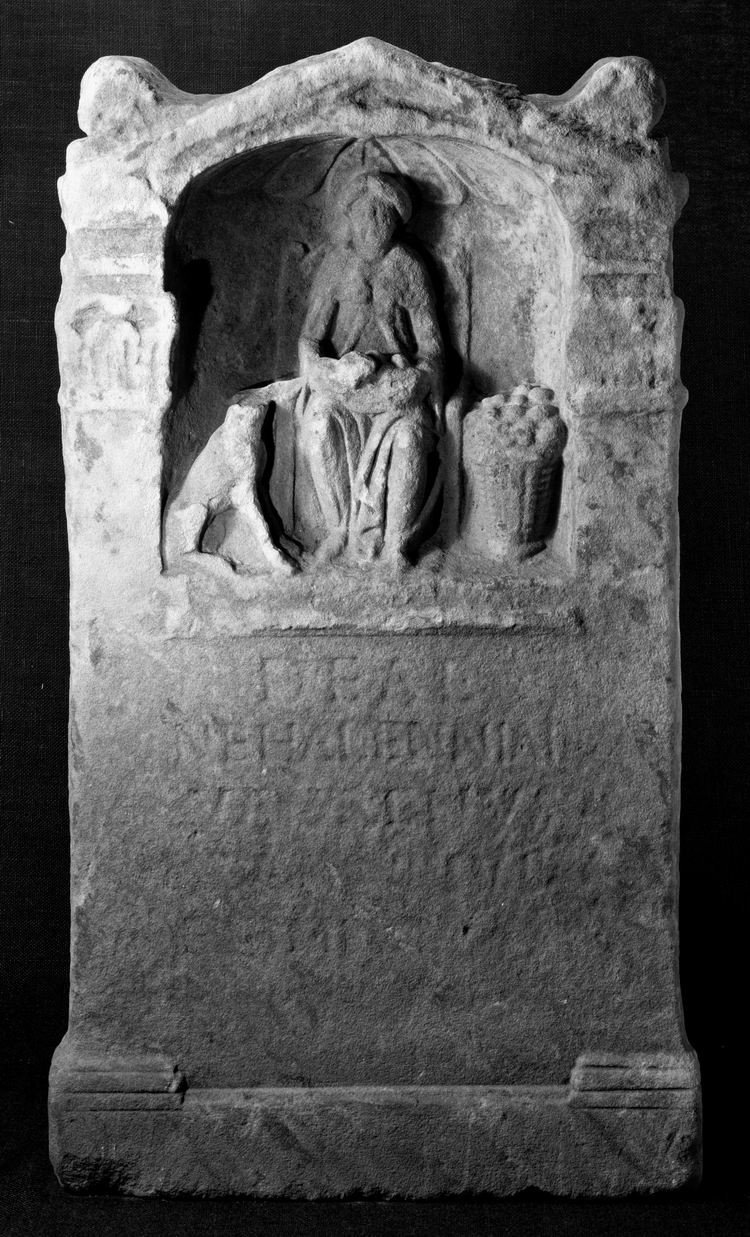
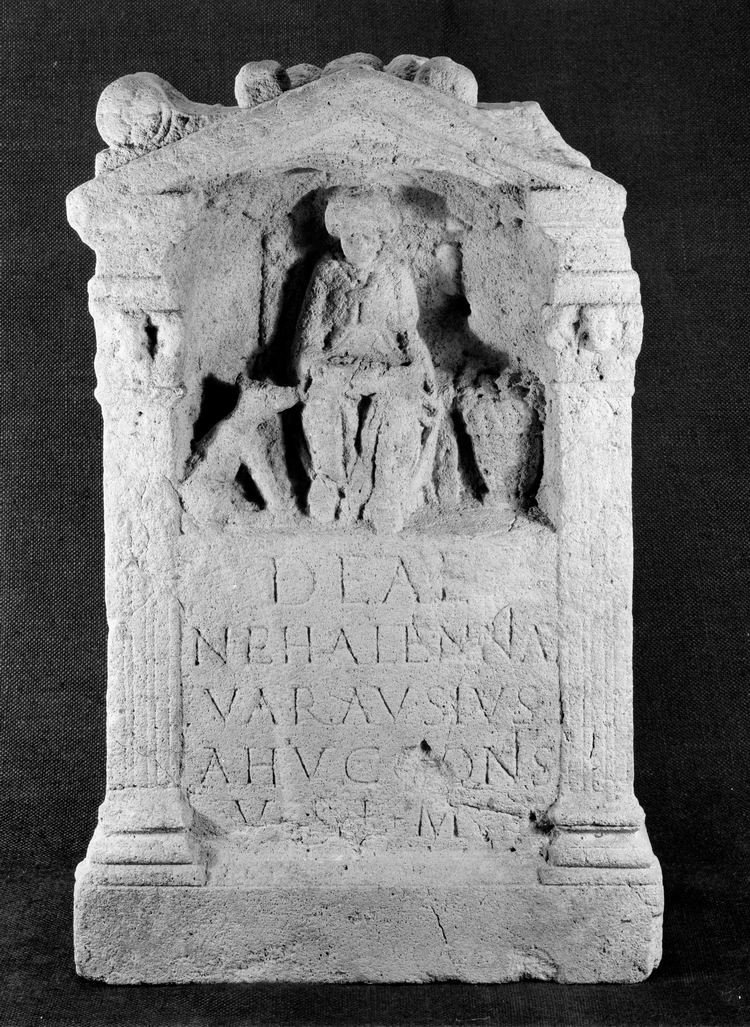
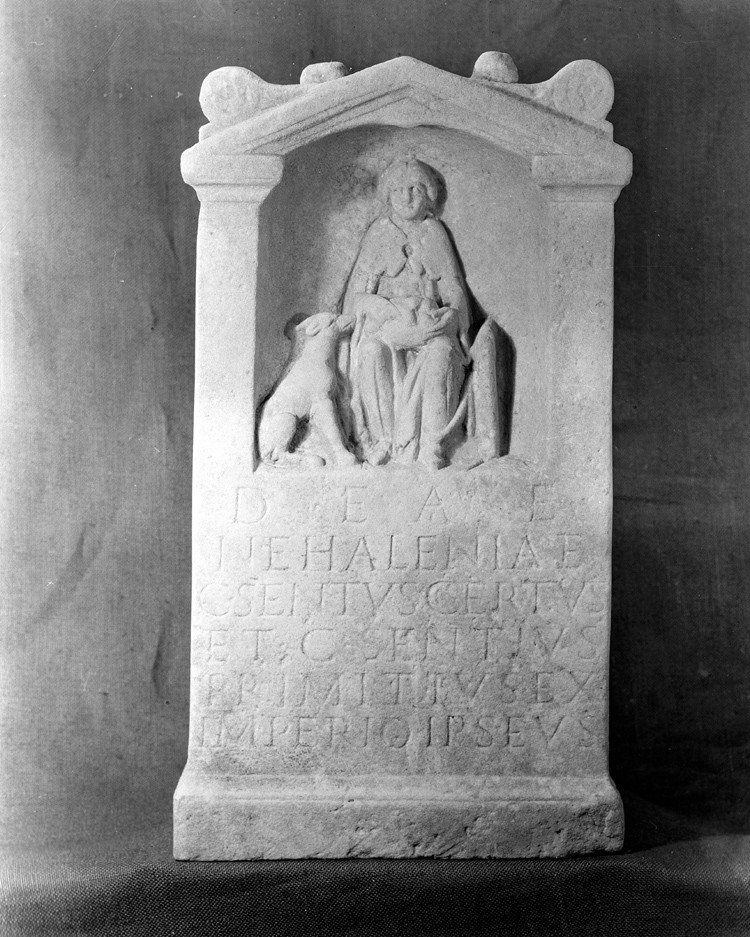
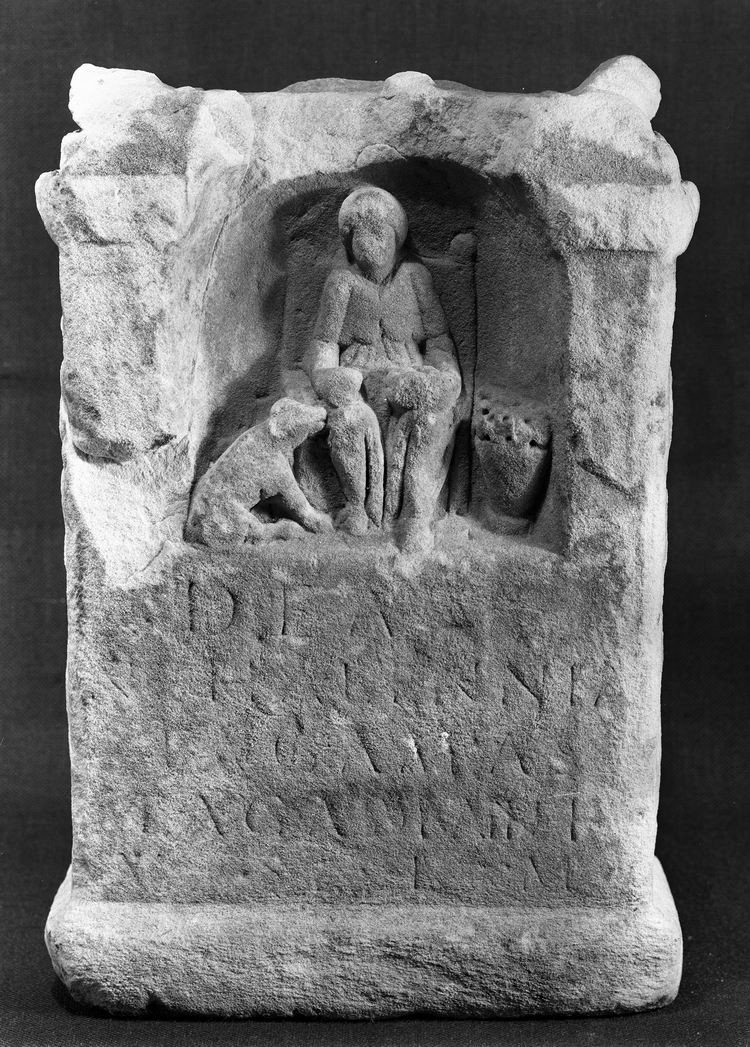
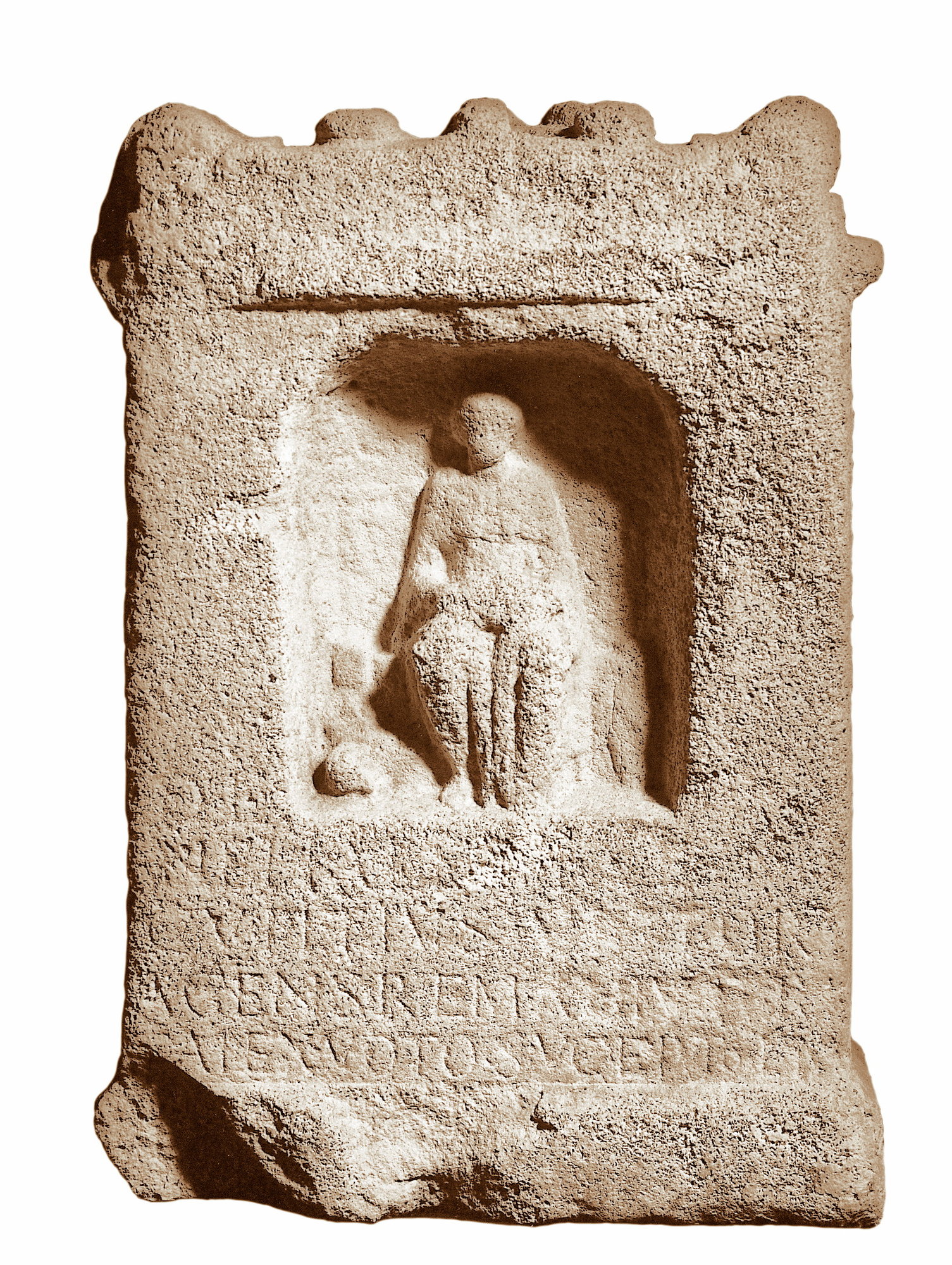
On some altars she is depicted standing, or with her left foot on a ship’s prow. Here too we see her with fruit and a dog at her side.
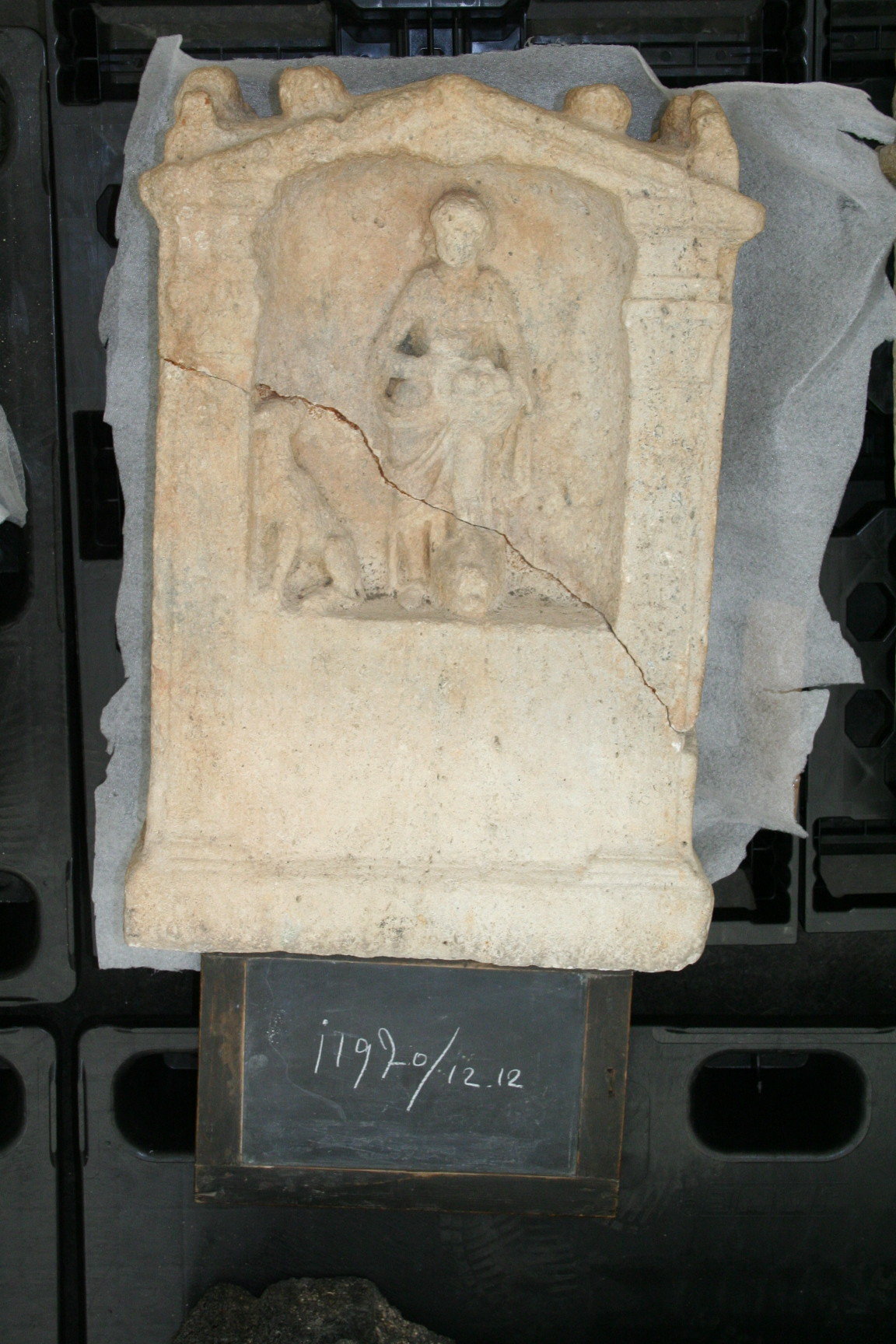
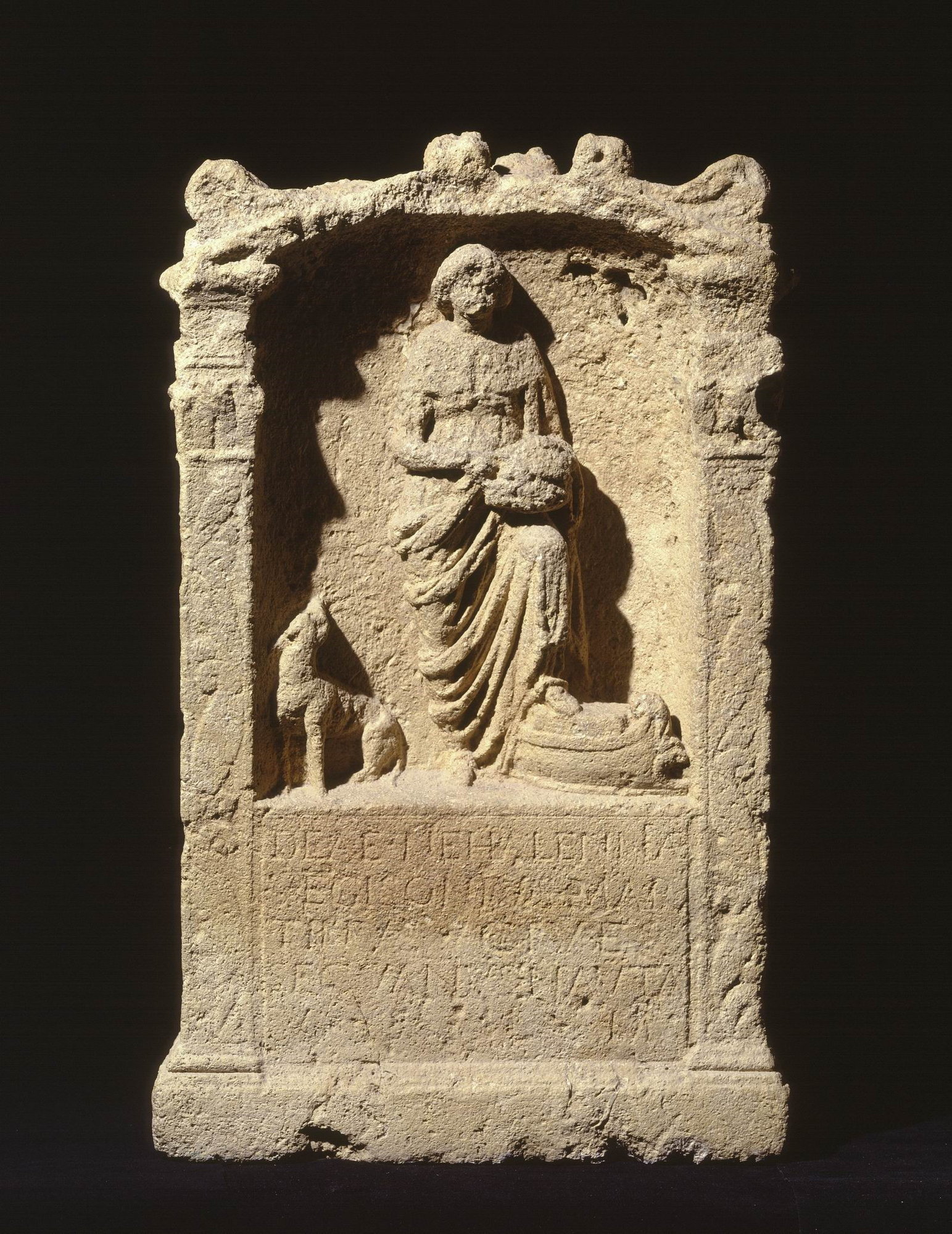
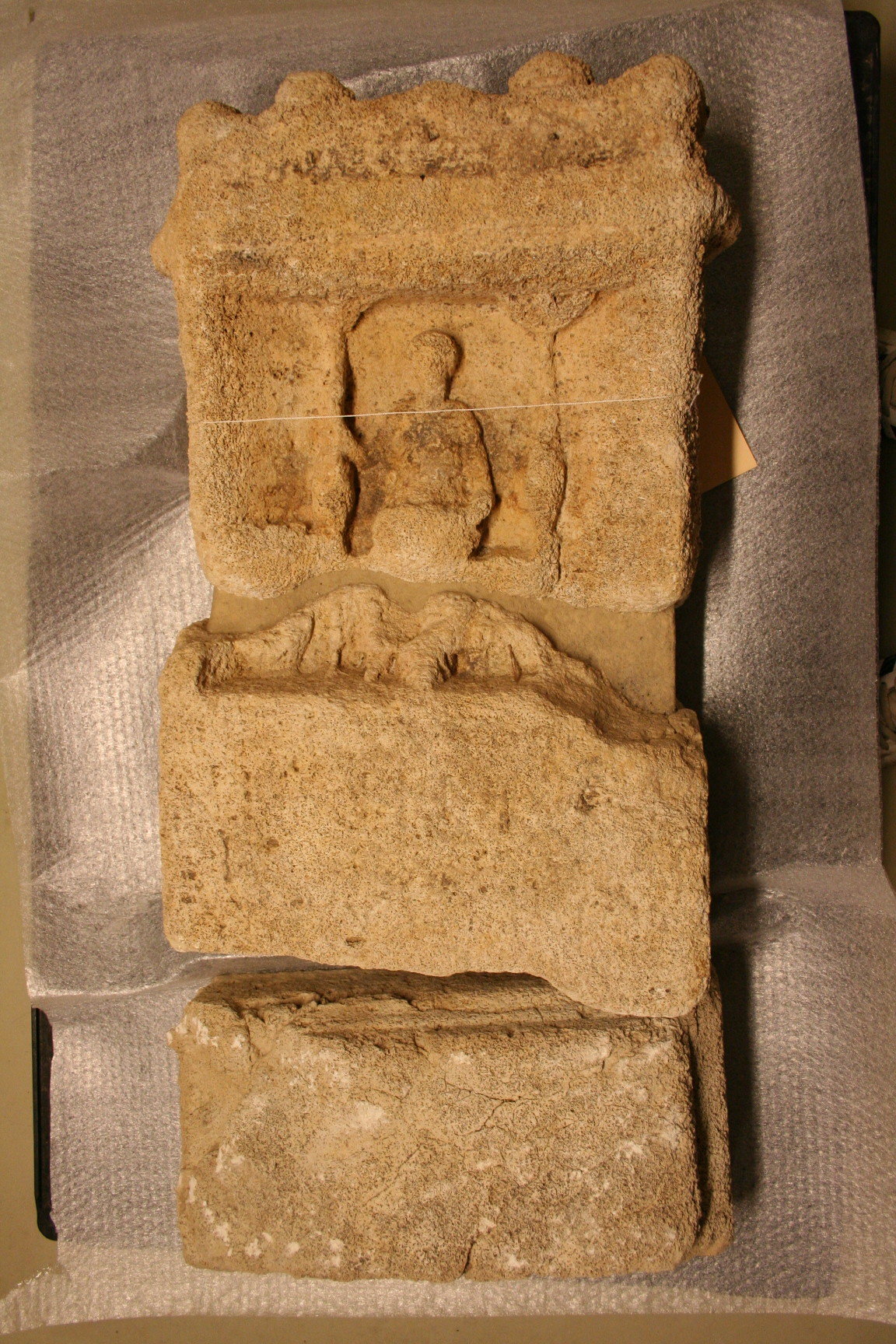
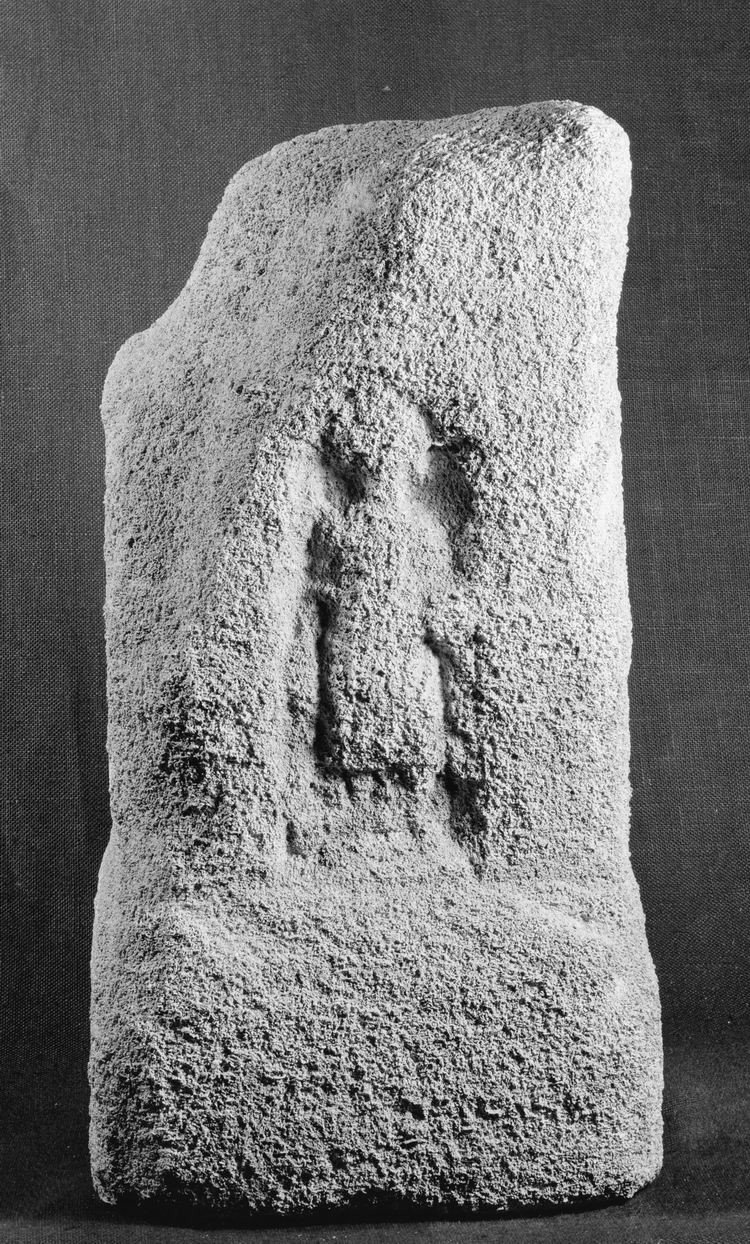
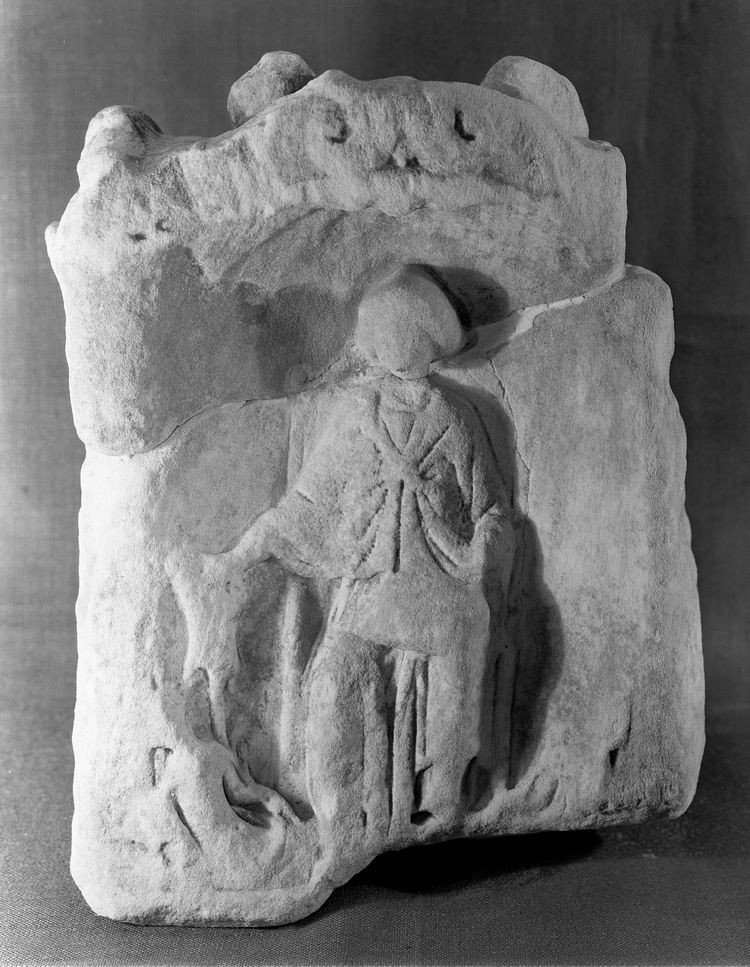
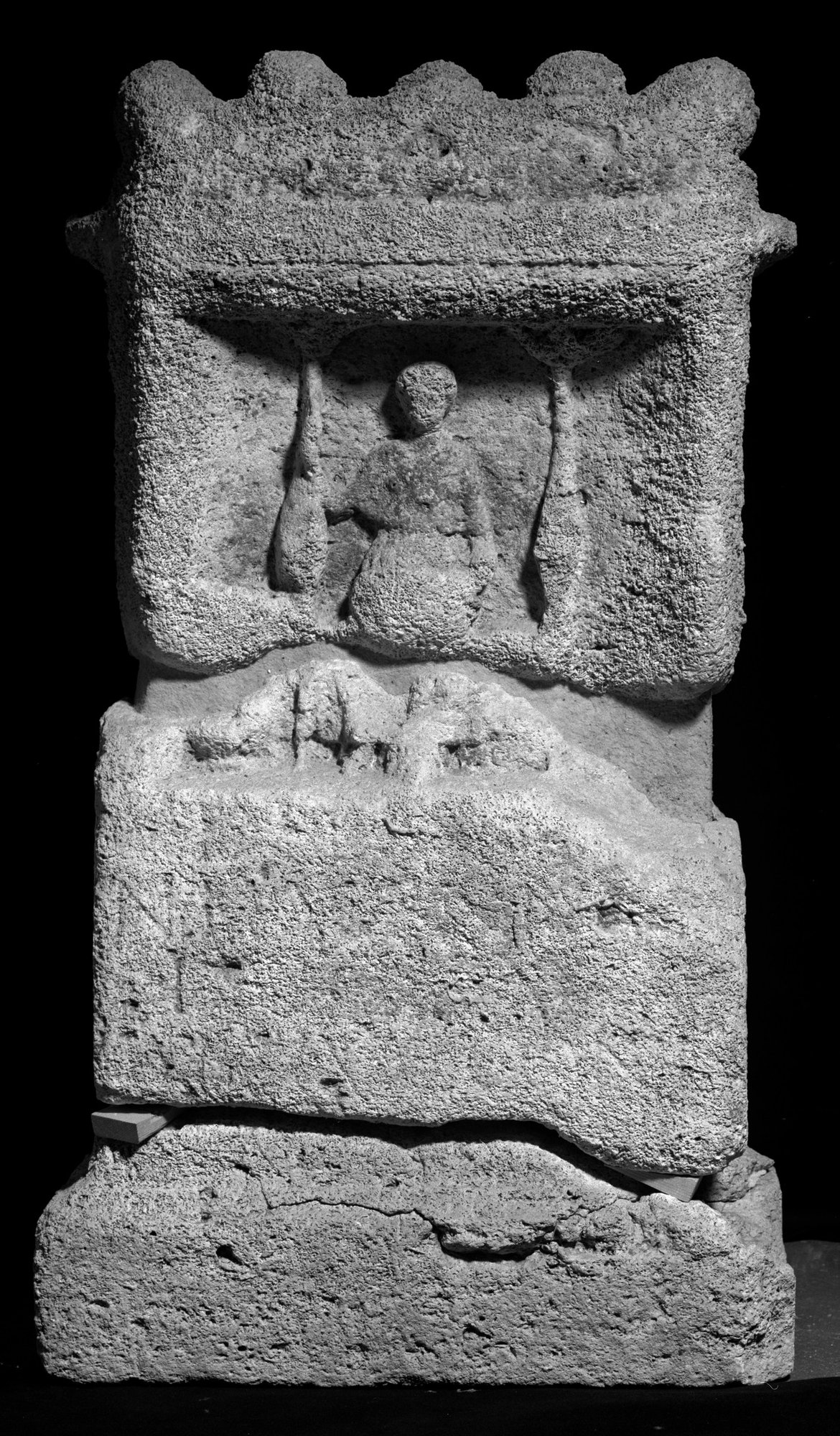
Striking about her clothing is the little shoulder cape (pelerine), which is unique to Nehalennia. It is sometimes joked that she is therefore the original Zeeland girl. On other altars she is depicted with a bonnet/cap comparable to the Matres.
Besides the above, the iconography sometimes also includes a rudder, dolphins, or the cornucopia (the horn of plenty). An offering table is sometimes depicted with loaves, a pig’s head, or fruit. Interestingly, on altar stones with a cornucopia we never see a dog.
Sometimes other gods are also depicted (on the side panels):
- Neptune with dolphins and trident
- Hercules with lion skin and club
- Cupid with palm leaf
A number of altars are striking and show 3 goddesses, as with the Matres/Matronae (mothers/matrones) that are commonly found in the Rhineland.
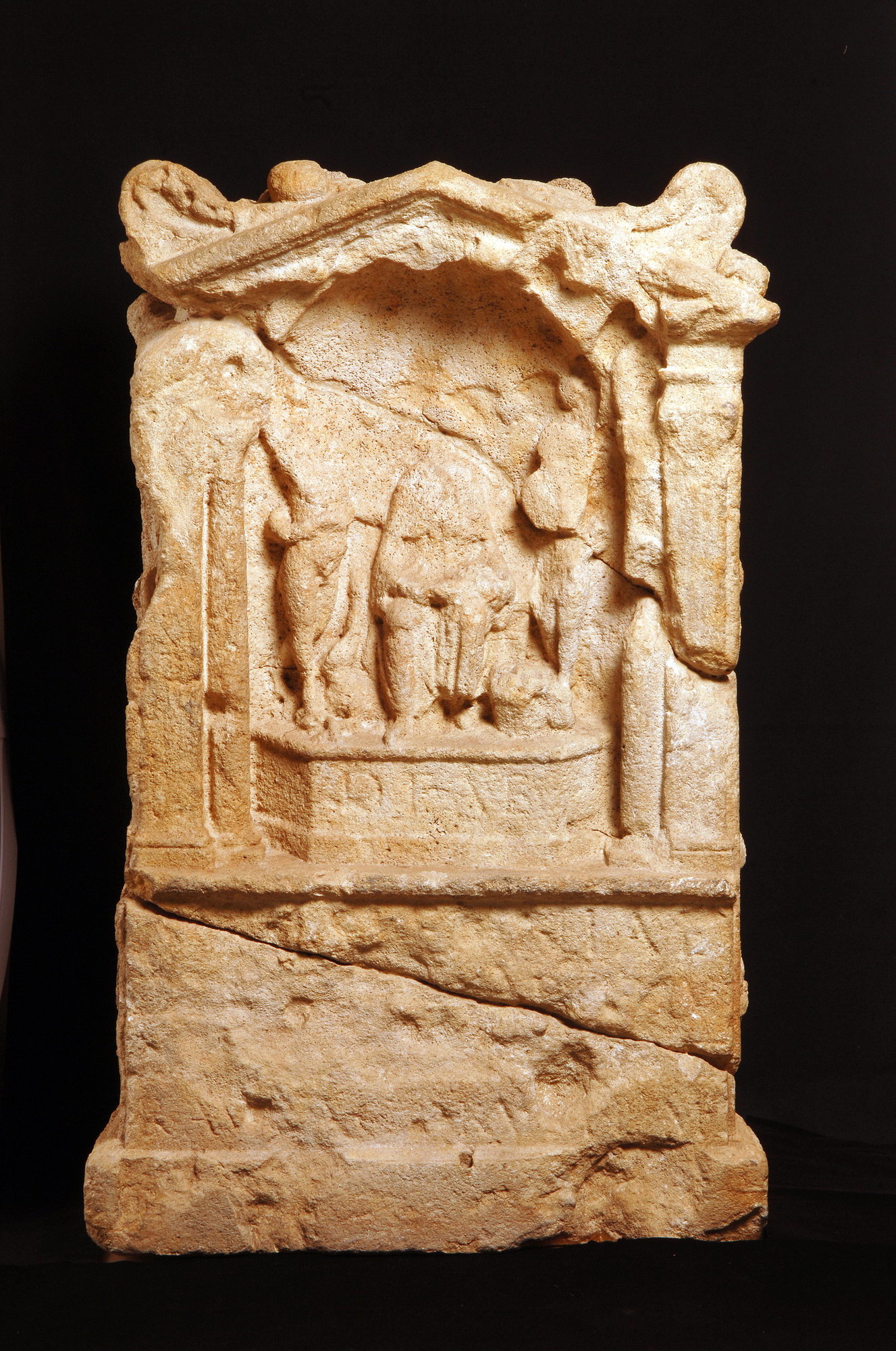
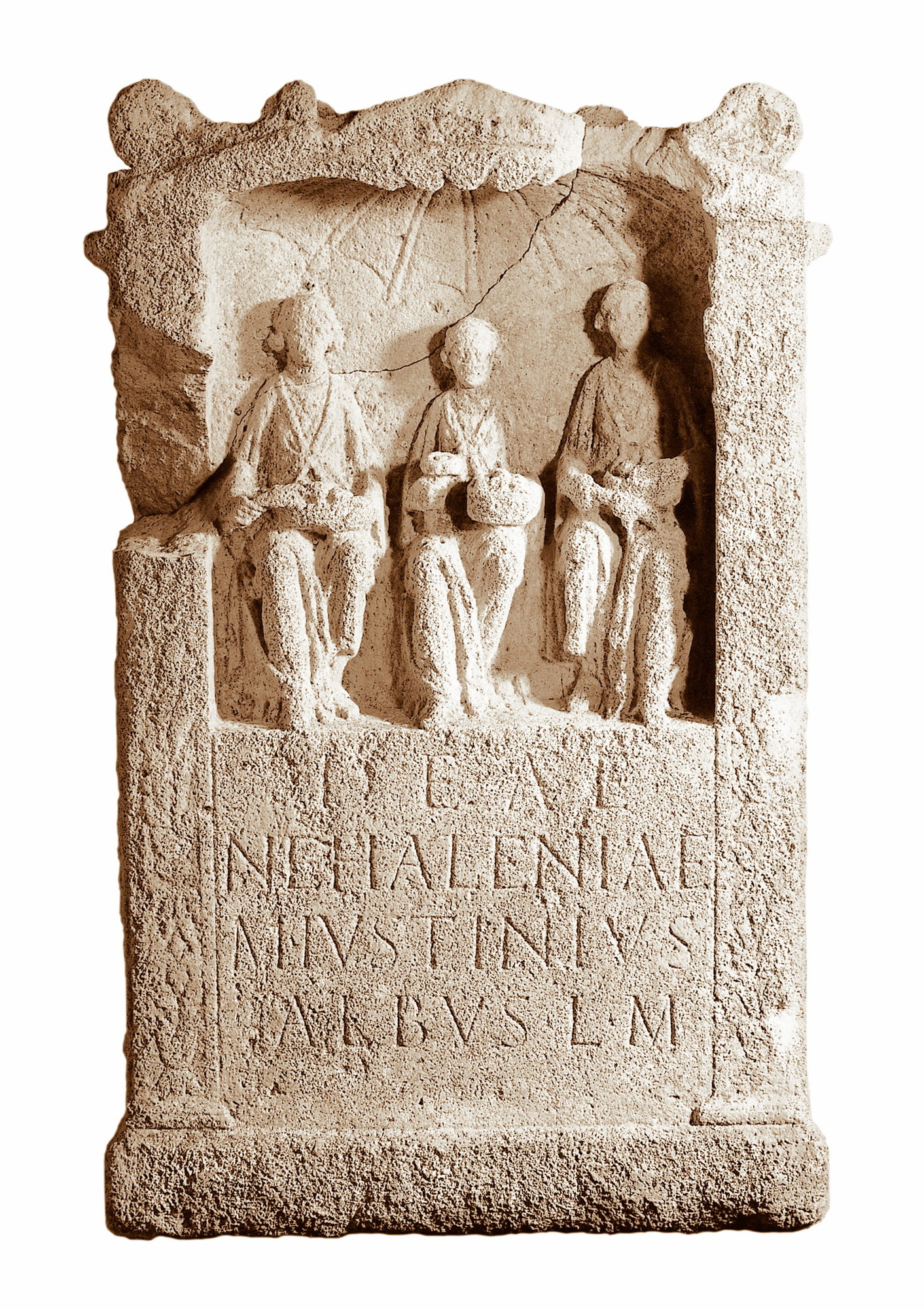
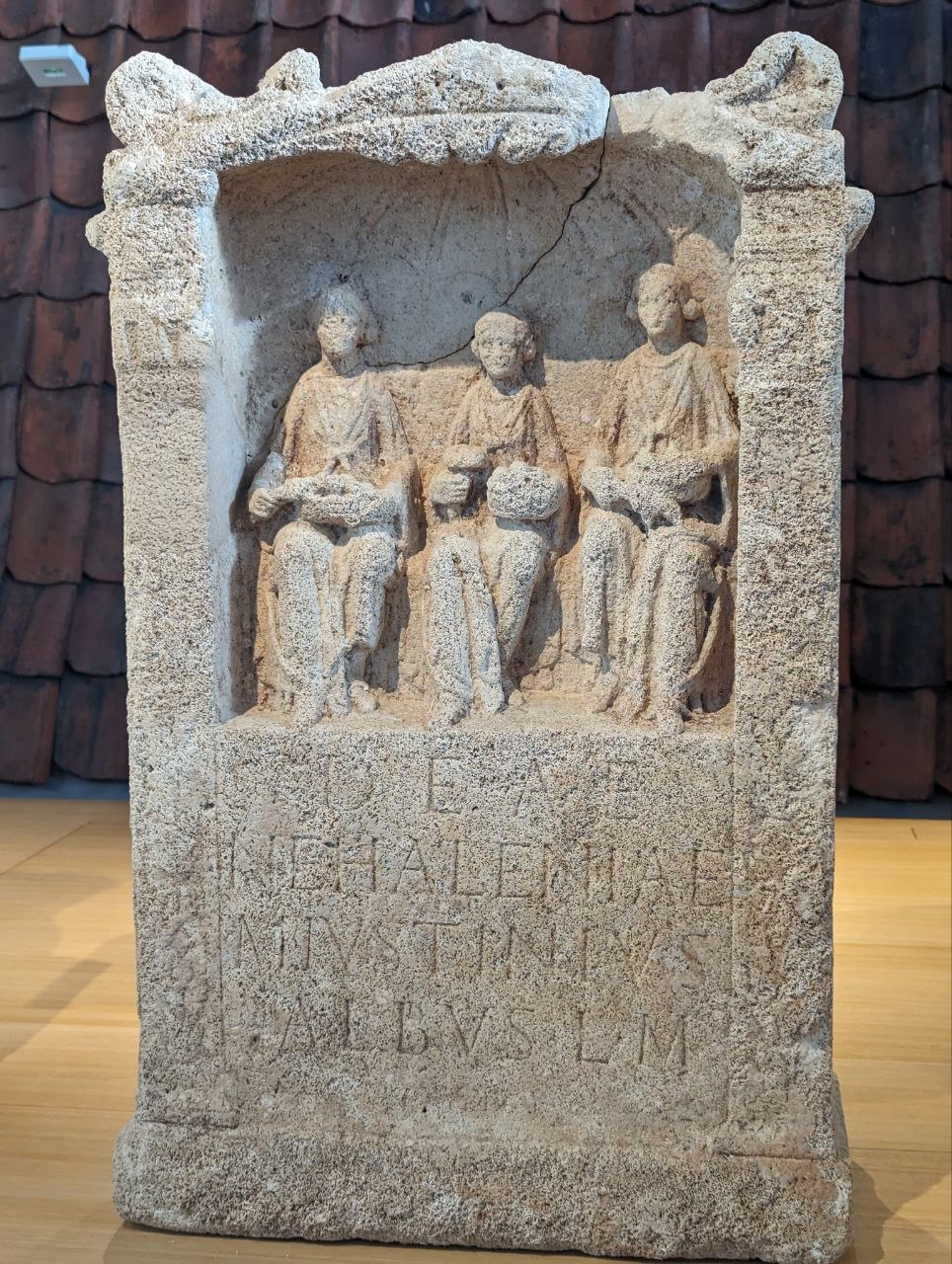
Although there are reasons to compare Nehalennia with the Matres, it should be noted that the Romans were pragmatic, and altars (and ash urns) were mass-produced, comparable to gravestones in our modern era. One chose a ready-made altar and could then have it engraved with one’s own text, or have names added to a standard text. At the same time, it should also be noted that there is a great deal of individual variation among the altars, indicating custom work or input from the buyer. But of course both can be true in this case.
Finally, an altar from Domburg shows a hunter with a hare as an offering.
Name and etymology
It is unclear whether Nehalennia was a Celtic or Germanic goddess, since the find spots of her temples lie on the boundary between Celtic and Germanic areas.
Although the find spots lie in Menapii and Morini territory, and about 16% of the worshippers’ names are Celtic, the name Nehalennia contains the -h- that is in fact typical of Germanic. In addition, the Scheldt (Scaldis, shallow) also has a Germanic name.
This also makes it difficult to determine what her name means. Various proposals have been made:
| Theory | Author | Year | Language | Meaning | Weakness |
|---|---|---|---|---|---|
| *neihhen ‘to bring offerings’ | Kern | 1871 | Germ. | ”The giver” | Outdated; OE cognate suggests *hnaikijaną ‘to kill’ (Mees 2023) |
| *nehwa- + *lenn- | Much | 1891 | Germ. | ”She who approaches and ceases” | Speculative; two reconstructed words (Mees 2023) |
| *nehwa ‘near’ | Gutenbrunner | 1936 | Germ. | Cannot explain the rest | Acknowledged as incomplete (Bartnik 2012) |
| *neiH- ‘to lead’ | Gysseling | 1960 | PIE | ”Leader, helmswoman" | "Not adopted by other authors” (Bogaers & Gysseling 1972 themselves) |
| *nei- ‘to lead’ | Bogaers & Gysseling | 1972 | ”Belgic”/PIE | ”Leader” | Not adopted; reconstruction upon reconstruction |
| -neha = “nymph/mother” | Grimm | 1835 | local | Suffix in other names | Only suffix, does not explain whole name |
| *ne + *halen + *ja | De Bernardo Stempel | 2004 | Celtic | ”She who is by the sea” | Based on reconstructed Late Celtic *halen- (from Welsh halein/heli); no direct attestation |
Although ‘to lead’ is not a popular etymology, I would like to mention that I personally lean towards it. This is partly due to the depiction of Nehalennia as part of 3 goddesses, as with the Matronae and the related Suleviae. Su-leuia is generally explained as su (good) and leuia (guide, leader), related to Welsh llywydd (governor) and hylyw (to lead). They are also associated with the Matres Gubernatrices, the guiding mothers.
In any case, it is certain that the name Nehalennia is not Latin, and most spelling variants are probably “Latinisations”. The variants are:
- Nehalennia (most common)
- Nehalaennia
- Nehalaenia
- Nechalenia (1× with (𐌝))
- Nehal(e)nnia
The spelling with a half H (𐌝) occurs on 2 altars from Colijnsplaat. This so-called “aspirated velar” otherwise only occurs in the Ubii region in Matronae names.
Function and inscriptions
We also know remarkably little about the function of Nehalennia. From the inscriptions we can infer that she was invoked for the protection of merchandise (ob merces / pro mercibus) and ships (pro navibus). But beyond that we actually know nothing.
Her iconography seems to suggest that she was also associated with abundance and fertility (fruit and cornucopia).
Various suggestions are made about the function of the dog:
- The dog as hunting-goddess symbol, a connection with Diana
- The dog as psychopompus, guide of the dead and connected with Hecate, the goddess of the underworld and crossroads
- The dog as loyalty/protection, the general interpretation
- The dog as Celtic mother-goddess attribute, although the dog at Nehalennia sits beside her, not on her lap as with other Matres
The criticism is that we do not know whether the dog protects or ignores (Livius).
Some votive stones show a draped veil or cloth, which Wagenvoort interprets as a funerary symbol (veils on graves). But there is no consensus on this. He further argues that the two temples had different functions: the one in Domburg for the cult of the dead, and the one in Colijnsplaat for trade.
Most inscriptions show the formula VSLM, “Votum solvit libens merito”, which means “fulfilled his vow willingly and deservedly”. A smaller number show only LM, “Libens merito”. Most altar stones were also dedicated by traders in, among other things, salt, fish sauce, and pottery. On some altars we see wine barrels depicted on a ship. The votive stones were dedicated as the fulfilment of a vow after a safe voyage.
Besides thanking the goddess, I suspect that placing such a votive altar also served a bit of a marketing function. The Nehalennia temple near Colijnsplaat lay on an important part of the route for the crossing to Britain, and the settlement of Ganuenta served for the transshipment from river vessels to seagoing ships. A VSLM altar immediately showed that the trader was someone who kept his vows.
It is striking that in a small number of inscriptions we read “ex imperio ipsius”, meaning “by her divine command”. This is rare among Roman gods, but occurs more often with, among others, the Matrones. This seems to indicate that the goddess herself gave the order to dedicate an altar. Some suggest that this may have been a dream vision.
One of the inscriptions from Domburg reads:
Nehalenni/ae Ingenu/inius Ianu/arius ex / pr(a)ecepto / aram posuit / pro salute / fili(i) sui
→ “To Nehalennia. Ingenuinius Ianuarius, by command [of the goddess], placed an altar for the welfare of his son.”
Besides traders we also see inscriptions from a sailor, ship’s outfitter, cavalry non-commissioned officer, a veteran, and a town councillor of the Batavi. Regarding the origin of the dedicants we see, among others, Britain, Trier, Cologne, Basel, the Seine valley, Boulogne, and even members of the imperial cult from Augst (Switzerland). Only one person is identified as a local inhabitant, Gimio from Ganuenta.
A large part of the dedicants have names that are clearly non-Roman but Celtic or Germanic. From Domburg we see several altars with a patronymic without filius: the father’s name is in the genitive, but “filius” (son) is omitted:
- Ammacius / Hucdionis — “Ammacius, [son] of Hucdio”
- Flettius / Gennalonis — “Flettius, [son] of Gennalo”
- Dacinus / Liffionis / filius — “Dacinus, son of Liffio” (here filius is included)
- Servatus / Theronis filius — “Servatus, son of Thero”
- Commodus / Ufentis filius — “Commodus, son of Ufentus”
- Placidus / Viduci filius — “Placidus, son of Viducus”
This omission of “filius” is a Celtic/Germanic name pattern in which the genitive of the father’s name alone suffices. This does not occur in standard Roman epigraphy.
Finally, we see another striking inscription from Domburg:
Deae Neha/lenniae / T(itus) Calvisius / Secundinus / ob meliores actus
→ “To the goddess Nehalennia. Titus Calvisius Secundinus, for better deeds/achievements.”
This is not found on any other Nehalennia altar, and it is not a standard Roman votive formula. What “better deeds” exactly means is also unclear, but it may indicate thanks for successful business or favourable circumstances. Since there is no “votum solvit” in the inscription, it is probably a thanksgiving without a preceding vow.
In conclusion
Beyond this we actually know next to nothing. No classical source mentions Nehalennia. Around 1860 the Oera Linda Book appeared, a manuscript that most people received as a fabrication. The manuscript claims that Nehalennia was the nickname of a prominent Frisian castle maiden named Minerva. She had received this name from sailors coming from Walhallcharia, because her teaching was so new and clear. Later she would be worshipped as a goddess by priests of the Magyars and Finns.
Hoax or not, I found it amusing enough to warrant a brief mention anyway.
At the harbour of Colijnsplaat there now stands a reconstruction of the temple of Nehalennia. It is open for visits almost every day. In addition, rituals in honour of Nehalennia take place annually.
Sources
- Nehalennia. Römische Steindenkmäler aus der Oosterschelde bei Colijnsplaat
- The Temple of Nehalennia at Domburg
- Over de naam van de godin Nehalennia
- Nehalen(n)ia, das Salz und das Meer
- Nehalennia and the Marsaci
- Religion an der Nordseeküste: Dea Nehalennia
- Nehalennia. Bogini z jabłami 84 lata później
- Nehalennia and the Souls of the Dead
- Nehalennia ΨΥΧΟΠΟΜΠΟΣ?
- Diachrone Studien zur Kontaktzone
- Nouveaux cultores de Nehalennia
- Naamanalyse van Nehalennia-dedicanten
- Epigraphic Database Heidelberg (EDH)
- Epigraphische Datenbank Clauss-Schlaby (EDCS)
- Rijksmuseum van Oudheden (RMO), Leiden
- Cultural Exchange and the Individual on Rome's German Frontier